Apple just added over 100 subscription metrics to App Store Connect — MRR, churn, cohorts, and offer tracking are now native. For OTT and streaming businesses managing subscriptions across multiple platforms, here's what changed, what it doesn't cover, and how to close the gap.
If your app offers auto-renewable subscriptions on iOS, you've probably felt this: you know how many people subscribe, but not why they stay, convert, or leave. App Store Connect gave you downloads and revenue. The subscriber journey in between? You had to figure that out yourself.
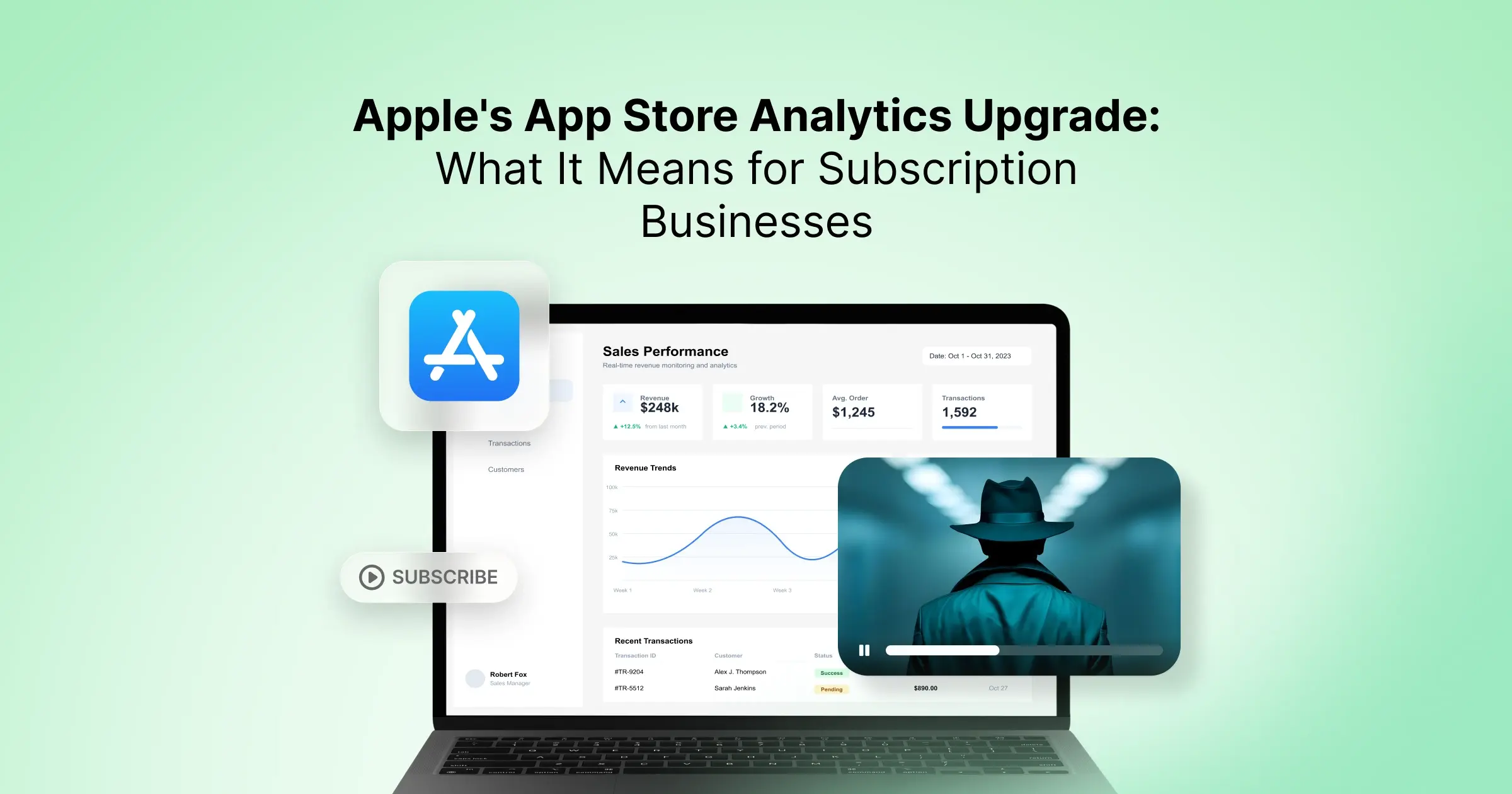
Apple just changed that. With 100+ new metrics in App Store Connect Analytics, they've brought subscription-level visibility (MRR, churn, renewals, offer tracking) directly into the platform.
This is a welcome shift. And it aligns with something we've long believed at Cleeng: the more visibility there is into subscriber behaviour, the better the industry is equipped to act on it. Here's what Apple shipped, and what it means for anyone managing subscriptions at scale.
What Apple actually shipped
Apple's App Store Connect update is a meaningful step forward for subscription visibility at the platform level. The new analytics go well beyond download counts and revenue totals.
The headline additions in this Apple release include:
-
MRR and churn rate: tracked natively, filterable by territory, source, device, and app version
-
Renewal tracking: monitor how subscriptions progress through the renewal lifecycle
-
Offer performance: measure conversion impact of introductory, promotional, and win-back offers across segments
-
Cohort analysis: group subscribers by download date, acquisition source, or offer type and track retention over time
-
Peer benchmarks: two new monetization benchmarks (download-to-paid conversion rate and proceeds per download) let you compare against apps in your category
-
Advanced filtering: up to seven simultaneous filters on any metric
-
API access: two new subscription reports available via the Analytics Reports API
If you've been exporting CSVs and stitching together third-party tools just to understand basic subscriber health on iOS, this removes a lot of that friction. It's a meaningful step forward.
The cohort and benchmarking features are particularly worth paying attention to. Being able to see whether a specific campaign drives long-term paying users – not just installs –changes how you plan the next quarter. And peer benchmarks give you context that raw numbers alone never could: knowing your download-to-paid conversion rate is 4% means nothing until you know whether that's above or below your category median.
Why this matters for subscription businesses
Apple is sending a clear signal: subscription performance is a first-class priority at the platform level. That's a strong signal for the industry.
The cohort and benchmarking features are particularly worth paying attention to. Being able to see whether a specific campaign drives long-term paying users, not just installs, changes how you plan your next quarter. And comparing your conversion rates against peers in your category gives you context that raw numbers alone never could.
At Cleeng, we see this as a validation of the approach we've taken for years. We've always built around the idea that the real value isn't just in seeing the data, it's in knowing what to do with it. Apple's new analytics give you the "what." Our Subscriber Retention Management® platform helps you act on the "why" and the "what next."
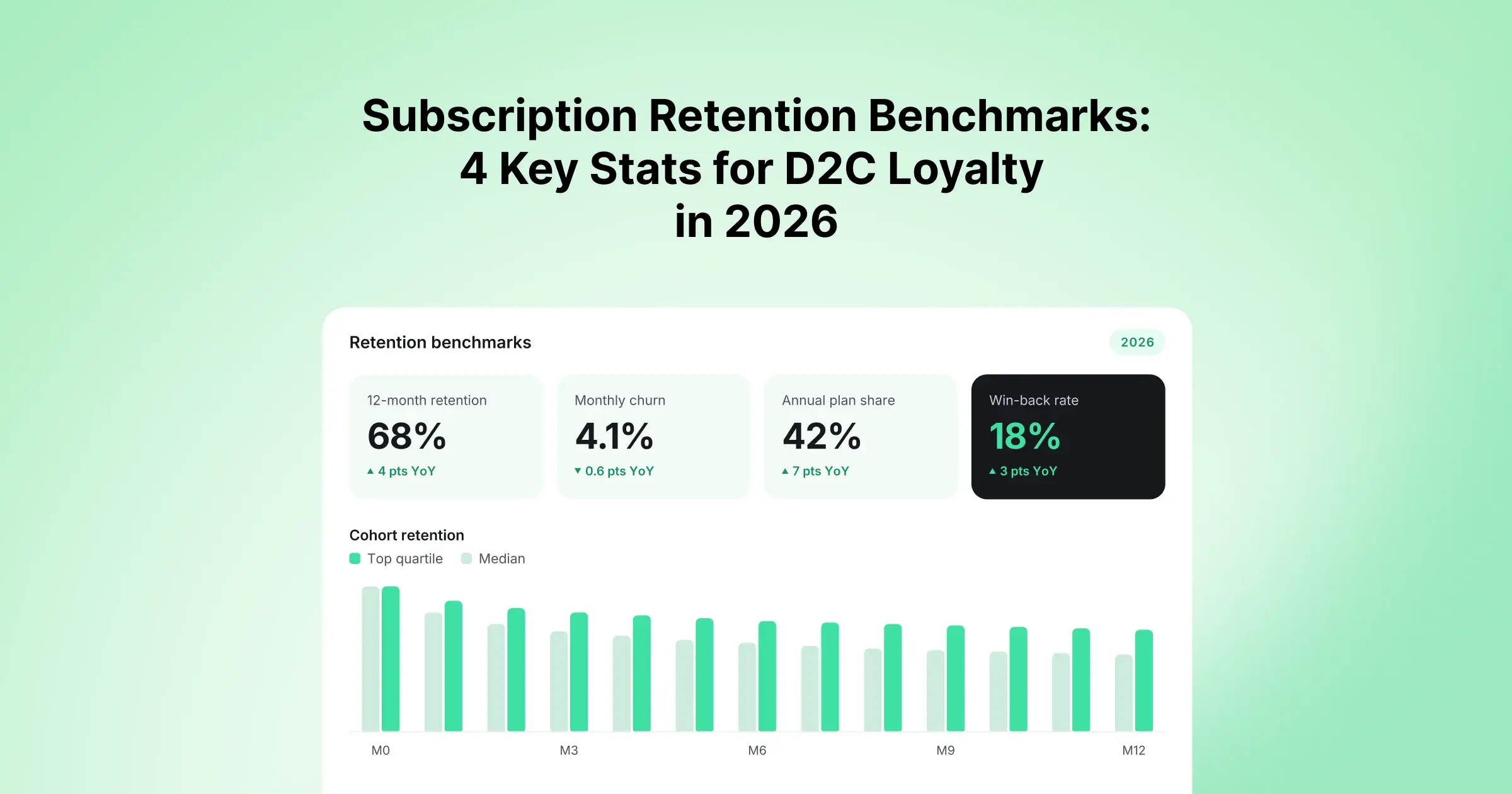
| Do you run a digital subscription business? Download the 2026 Subscription Benchmarks report to see how you're doing against your peers – and what strategies to implement to move the needle up. |
How Cleeng fills the Apple App Store Connect gap
Apple's upgrade is a significant step forward — but it's scoped to iOS. In reality, subscribers don't live on a single platform. They purchase through Apple's App Store, Google Play, Roku, Amazon Fire TV, Samsung TV, Vizio — and increasingly through telco carrier billing, ISP bundles, and partner resellers. Each of these channels has its own billing system, notification format, and lifecycle logic.
This is exactly the problem Cleeng's SRM® platform solves. Cleeng integrates with all major app stores and external billing channels, normalizing their different subscription signals into a unified API. Whether a subscription originates from an Apple in-app purchase, a Google Play renewal, a Roku webhook, or a carrier billing partner, Cleeng translates those events into a consistent lifecycle model — active, grace period, on hold, cancelled, expired, refunded — and manages entitlements centrally.
|
App Store Connect |
Cleeng SRM® |
|
|
Scope |
iOS only |
All major platforms and billing channels |
|
MRR tracking |
iOS subscribers |
Consolidated across all channels |
|
Cohort analysis |
By iOS download/offer |
Cross-platform subscriber segments |
|
Entitlement management |
Apple IAP only |
Single API regardless of purchase origin |
|
Lifecycle model |
Apple-defined states |
Normalized: active, grace, on hold, cancelled, expired, refunded |
|
Offer tracking |
iOS promotional offers |
Multi-channel offer performance |
App Store Connect gives you rich analytics for your iOS subscribers. Cleeng gives you a single source of truth across all of them.
One dashboard to see subscriber distribution by channel. One API to check entitlements regardless of where the purchase happened. Consolidated reporting that shows the full picture, not just one slice of it.
Apple's investment in subscription analytics raises the bar at the platform level, and that's good for the entire industry. But for anyone managing subscriptions across multiple channels — which is most media and streaming businesses today — the real unlock is having an operational layer that unifies all of those signals into one coherent view. That's what Cleeng's SRM® is built to do.
Ready to connect your platform-level analytics to a broader retention startegy? Create your free account.

Frequently Asked Questions
Does App Store Connect now show subscriber churn rate? Yes. App Store Connect's updated analytics include churn rate as a native metric, calculated as cancellations over a 31-day period divided by active subscriptions. It's filterable by territory, device, source, and app version.
What subscription metrics are new in App Store Connect? The major additions include MRR, churn rate, renewal rate, cohort analysis (grouped by download date, acquisition source, or offer type), offer performance tracking for introductory and win-back campaigns, and two peer benchmarking metrics: download-to-paid conversion and proceeds per download.
Does App Store Connect track subscriptions from Google Play or Roku? No. App Store Connect analytics are scoped to iOS auto-renewable subscriptions only. For operators managing subscriptions across Google Play, Roku, Amazon Fire TV, or other channels, a separate subscription management layer is needed to consolidate that data.
What is Subscriber Retention Management (SRM®)? Subscriber Retention Management is an operational layer that normalizes subscription lifecycle signals from multiple billing channels into a unified model. Cleeng's SRM® platform tracks subscriber states — active, grace period, on hold, cancelled, expired, refunded — across all major app stores and billing partners, enabling centralized entitlement management and cross-platform analytics.
How do I connect App Store Connect analytics to my overall retention strategy? App Store Connect provides iOS-level visibility into subscriber behavior. To translate that into cross-platform action, you need a platform that ingests those signals alongside data from other channels and maps them to a consistent subscriber lifecycle. That's where Cleeng SRM® fits in.