---
title: "How to Recover Subscription Revenue: 3 Gaps Subscription Brands Ignore"
description: Discover how brands can recover subscription revenue by addressing overlooked gaps in billing flexibility, data fragmentation, and payment recovery.
image: https://blog.cleeng.com/hubfs/recover%20revenue.webp
---
Products
What it does
[Core Subscriber Management and Billing](https://cleeng.com/subscriber-management-system) [Merchant of Record Payments, Tax and Compliance](https://cleeng.com/merchant-checkout-optimization) [ChurnIQ Smart and Predictive Churn Analytics](https://cleeng.com/products/subscription-churn-analytics) [Hi5 AI-Enhanced Customer Care](https://cleeng.com/customer-care-digital-subscriptions)
AI Products
[Cleeng AI Ask questions in plain language](https://cleeng.com/ai) [Cleeng MCP Server Connect Cleeng to your own AI tools](https://cleeng.com/ai/mcp) [Data Intelligence Enriched context for every subscriber](https://cleeng.com/ai/subscriber-data) [Trust & Governance Complete control and auditability](https://cleeng.com/ai/legal)
Solutions
By industry
[Streaming and OTT](https://cleeng.com/solutions/streaming) [Sports](https://cleeng.com/solutions/subscription-management-for-sports) [Wellness](https://cleeng.com/solutions/wellness) [Creators](https://cleeng.com/solutions/youtube-creators) [Gaming](https://cleeng.com/solutions/gaming) [Memberships](https://cleeng.com/solutions/memberships)
By scale
[Enterprise](https://cleeng.com/solutions/enterprise) [Small and Medium Businesses](https://cleeng.com/pro)
For partners
[Agencies & Integrators](https://cleeng.com/solutions/agencies) [B2B2C Platforms](https://cleeng.com/solutions/b2b2c-platforms)
Developers
[Launch Subscriptions](https://developers.cleeng.com/docs/launch-subscriptions) [Build with LLMs](https://developers.cleeng.com/docs/build-with-llms) [Integrate apps](https://developers.cleeng.com/docs/payments_on_mobile_tv_apps_intro) [System status](http://status.cleeng.com/) [Integrations Hub](https://cleeng.com/integrations-connectors) [Migration guide](https://cleeng.com/migrate-to-cleeng) [Certified Partner Program](https://publisher.support.cleeng.com/hc/en-us/articles/22272169788188-Cleeng-Certified-Partner-Program)
Resources
[Publisher Help Center](https://publisher.support.cleeng.com/hc/en-us) [Blog](https://blog.cleeng.com/) [Customer stories](https://cleeng.com/clients) [Events](https://cleeng.com/events) [Research & reports](https://cleeng.com/resources) [Demo Hub](https://cleeng.com/demohub)
[Pricing](https://cleeng.com/pricing)
[Login](https://srm.cleeng.com/auth) [Get started free](https://srm.cleeng.com/auth/register)
[Blog](https://cleeng.com/blog)
# How to Recover Subscription Revenue: 3 Gaps Subscription Brands Ignore
Churn & Retention | Sebastian Boruch | Apr 23, 2026
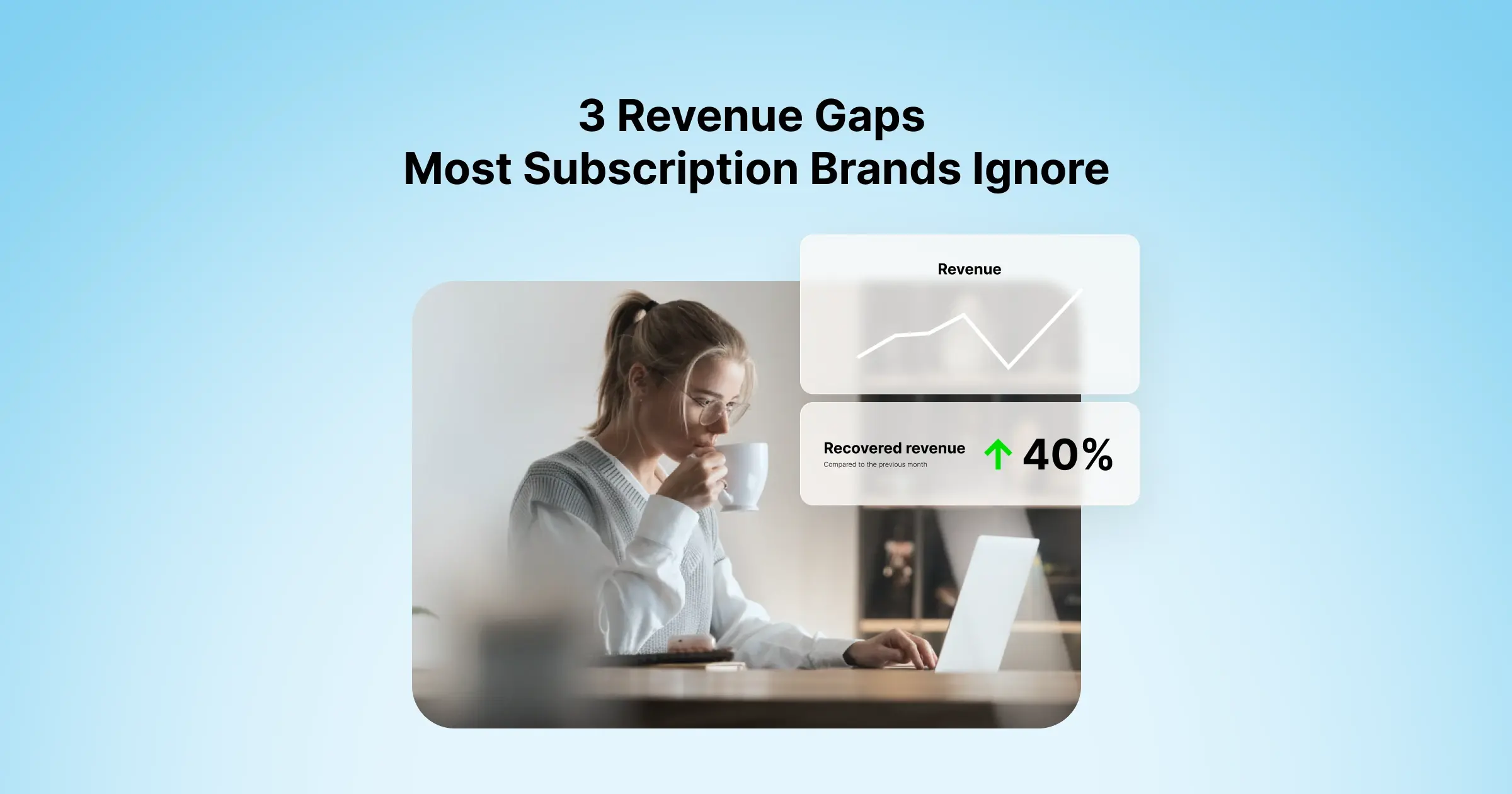
You don't always need new customers to grow**.** If you want to recover subscription revenue, the money you need is likely already flowing in — just quietly leaking back out.
Most subscription brands are running the same playbook: optimize acquisition, improve conversion, reduce CAC. And those things matter. But there's a quieter problem that rarely makes it onto the roadmap – revenue that's already been earned, already within reach, already in your subscriber base, quietly slipping away.
It’s no longer news that retaining an existing customer costs 5 to 7 times less than acquiring a new one. Yet most [D2C subscription businesses](https://blog.cleeng.com/d2c-subscription-model-how-to-build-a-future-proof-subscription-platform) still direct the majority of their attention - and budget - toward the top of the funnel. The result is a growth strategy with a leak in the floor.
Below, we outline three subscription revenue recovery gaps that show up across subscription businesses of all sizes, in every vertical. None of them requires a new product or audience. They require visibility, followed by action. And addressing them is one of the fastest ways to **recover subscription revenue** without increasing your acquisition spend.
## **Gap 1: No billing flexibility means subscribers leave when they would have stayed**
When a subscriber cancels, the instinct is to ask: *why didn’t they stay?* But that's the wrong question for a significant share of cancellations - because the subscriber did want the product, it’s just the timing that wasn’t right.
Billing dates that don't align with paycheck cycles, renewals that hit during a month of unexpected expenses, subscribers who are traveling or facing a short-term cash constraint – these aren't cancellations driven by dissatisfaction. They're cancellations driven by friction. The subscriber doesn't leave because they no longer want your content. They leave because they're forced to.
This is the renewal timing trap. And it's one of the most overlooked sources of recoverable revenue in subscription businesses.
### **Why the lack of subscription billing flexibility accelerates churn**
Most subscription platforms offer a binary choice at renewal: pay now, or cancel. There's no strategy to retain the subscriber as there is no:
- [Subscription pause](https://blog.cleeng.com/how-to-use-subscription-pauses-to-reduce-churn-and-boost-retention) option
- Ability to shift a billing date by two weeks.
- [Downgrade path](https://blog.cleeng.com/how-to-re-engage-subscribers-at-the-cancellation-stage) that preserves the relationship
So customers who would have stayed end up classified as churned.
The signal to watch is specific: cancellations occurring within 48 hours of a renewal date**.** These are not the same as cancellations from a disengaged subscriber who hasn't logged in for three months. They're timing failures. The good news is that they're recoverable.
### **What this looks like in practice**
A subscriber on a premium annual plan hits renewal during a particularly tight month. There's no option to pause for 30 days, no option to drop to a lower tier and reactivate later. The only option is cancellation. Six months later, they might come back – but that six-month gap is a direct revenue loss.
### **The fix: build subscription billing flexibility into your cancellation flow**
- A pause option presented before cancellation is confirmed
- Billing date flexibility at renewal, offered proactively
- A visible downgrade path as an alternative to full cancellation
These features do more than improve [retention metrics](https://blog.cleeng.com/most-important-retention-metrics-digital-subscription-businesses) – they form the infrastructure of your revenue.
Subscription management platforms like Cleeng offer all of these out of the box, so you can implement subscriber retention strategies from day one.
[](https://blog.cleeng.com/hs/cta/wi/redirect?encryptedPayload=AVxigLIHe2N9J5hjx0I1lSE2BkZ7r5B4e8kSx%2FO1wi3KAK%2F6IR71yPvQFBCFWGHImKZnZXvoIilnHvBewYZF0KBZ34lnEBMGcotLG%2FACBG0IkIXxGrfX4OzuzBpTVySzrqQgAcU0AlrVGrkqFbQYvOyyPC9diLfr5Ta%2Fx21ZooUioef%2Be7FKUZFLzBQ1NeZgP4xycnjdKqjV&webInteractiveContentId=211574990514&portalId=5813983)
## **Gap 2: Fragmented subscriber data is quietly distorting your churn numbers**
Subscription businesses live across multiple platforms and screens. A customer might subscribe through your website, manage their account through an iOS app, and be bundled through a telco partner in another market. From the customer's perspective, this is one relationship. From your data's perspective, one subscriber may look like three separate people.
This is the cross-channel blind spot — and without **unified subscriber data**, it distorts almost every metric you use to make retention decisions.
### **What fragmented data actually costs you**
When channels aren't unified, a subscriber who cancels on web might still be active through an app store or aggregator bundle. Your system logs them as churned, your retention team targets them with [win-back campaigns](https://blog.cleeng.com/how-to-win-back-lost-subscribers-campaign-examples-and-strategies), and your LTV model writes them off. None of that is accurate — because the customer never left.
The reverse is also true. A customer active on one channel but lapsing on another represents an upsell opportunity - if you can see the full picture. Without identity and entitlement unification, you can't.
The signal to watch: users appearing as multiple customer records across channels**.** Each duplicate record is a gap in your understanding of that relationship. Each gap is a missed opportunity - to retain, upsell, and calculate LTV accurately.
### **What this looks like in practice**
A sports streaming service sees a sharp drop in [web subscriptions](https://blog.cleeng.com/web-payments-for-mobile-apps-a-smarter-way-to-increase-subscription-revenue) at the end of a season. Their churn report looks alarming. But a meaningful percentage of those "churned" subscribers are still active through a telco bundle they signed up for during a promotion three months ago. The churn isn't real - but without unified subscriber data, the team is making decisions based on a number that doesn't reflect reality.
Or consider the upsell version: a subscriber who is highly engaged on mobile but has never been exposed to a premium content tier available only on web. Without a single view of that subscriber across channels, that offer never lands in the cart.
### **Build the data infrastructure to see the full subscriber relationship**
Recovering subscription revenue from this gap requires:
- A unified subscriber record spanning web, app stores, and partner channels
- Entitlement management that reflects the full relationship, not just one channel
- Reporting that distinguishes true churn from channel migration
With Cleeng, all subscriber data is visible in a centralized dashboard — eliminating duplicate records and fragmented insights so your retention decisions are based on what's actually happening.
[](https://blog.cleeng.com/hs/cta/wi/redirect?encryptedPayload=AVxigLKsFc%2FYfHr4BdXnaydcGstupDYgy8QusfNB7AQxI0hTU2zpinoqWrWI9rfnEPmNmAhi2JfFrxAZIWkquxILGXD4W1lEUo7UEOlNRKX7JVeaxDhblyY0qAcc32qxb%2FKf1v8Q3Mb3ro4PzKsUhb6X0r04fC13umkaPryZpljYxNZE1LVXNzjo4sBrNZfYFG24%2BpjWE3s%3D&webInteractiveContentId=211574990519&portalId=5813983)
## **Gap 3: Failed payment recovery is the fastest subscription revenue to recover**
Of the three gaps in this article, this one has the clearest math - and arguably the fastest time to value.
Failed payments are almost universally treated as closed cases. When a card declines or a charge fails, the system logs it and maybe sends a dunning email. Eventually, the subscription is cancelled and the revenue is lost. But most payment failures aren't statements of intent – they're temporary friction.
### **Involuntary churn is larger than most brands realize**
A card that's expired, an unexpected cost that temporarily maxed out a limit, a banking entity that flagged an international charge — in none of these cases did the subscriber choose to leave. A technical obstacle appeared at exactly the wrong moment.
For most D2C subscription businesses, [**involuntary churn**](https://blog.cleeng.com/involuntary-churn-how-to-prevent-lost-revenue-from-failed-subscription-payments) - churn caused by payment failure rather than deliberate cancellation **- accounts for** [**20 to 40% of total churn**](https://razorpay.com/blog/category/payments/)**.** That means for every five subscribers you lose in a given month, one or two of them never wanted to cancel. That's not a rounding error. It's a recoverable revenue line item sitting in your payment data right now.
The signal to watch: the percentage of your total churn that is classified as involuntary. If you don't know this figure, that's the first problem. If you do know it and it's above 15%, you have a failed payment recovery opportunity sitting in your payment data right now.
### **What this looks like in practice**
A subscriber's card expires. The renewal attempt fails. An automated email goes out with a link to update payment details — but it lands in a low-priority inbox and the subscriber doesn't see it in time. The subscription is cancelled. Three weeks later, when they try to log in and find their account inactive, they have to decide whether to resubscribe. Many won't.
The gap between "payment failed" and "subscription cancelled" is where the recovery window lives. It's short - typically 24 to 72 hours - and most brands aren't working it with enough precision.
### **What smart payment recovery actually looks like**
- **Intelligent [retry logic](https://blog.cleeng.com/payment-recovery-strategy-dunning-settings)** — retrying at intervals and times more likely to succeed based on failure type, not just repeating the same attempt
- **Payment routing** — routing retries through alternative processors when a primary processor decline pattern is detected
- [**Proactive card updater programs**](https://blog.cleeng.com/adding-adyens-real-time-card-updater-to-tackle-involuntary-churn) — automatically syncing updated card details from card networks before a renewal attempt fails
- **Human-readable [dunning flows](https://blog.cleeng.com/dunning-best-practices)** — recovery communications that explain what happened and make it easy to act
None of this requires the subscriber to do anything dramatic. It just requires the system to work harder before writing the revenue off.
Cleeng's [Merchant of Record](https://cleeng.com/merchant-of-record) uses smart retry logic, automatic payment routing, and proactive card updaters to recover lost revenue – keeping subscribers active without them ever realizing there was a problem.
[](https://blog.cleeng.com/hs/cta/wi/redirect?encryptedPayload=AVxigLISCv5VTWk7lHUVvN1ivAiB27UCwlvKXnTSwXazR2Dc51i3bh86bS7jD783HaX1B6VhXLIFsDrAsbAnzjWgaoMfLTajgi37pF7OE3Ihlcli4mzfyJ2fKCHpofRuncCwnE%2FZ3VH6uCMKWHUM%2BQ18Ypi%2B%2FT%2FyBDL4e00gz7VZ238ppDKpwlZIuZfvX81hzEHUnW4MEuEd&webInteractiveContentId=211554614562&portalId=5813983)
## **Recover subscription revenue by starting with visibility, not acquisition**
Here's what the three gaps have in common: they aren't acquisition problems but rather visibility problems.
The renewal timing trap is visible if you're tracking cancellation timing relative to billing dates. The cross-channel blind spot is visible if you have unified subscriber records. The payment recovery gap is visible if you're segmenting churn by cause.
Most standard [subscription analytics](https://blog.cleeng.com/what-is-subscription-analytics-how-it-facilitates-growth-retention) tools aren't designed to look in these places. They're built for acquisition funnels, not retention depth. So the revenue sits there - in timing friction, in fragmented records, in failed payments - and the dashboard never flags it.
Cleeng is built specifically to surface these gaps and reduce subscription churn at source. It gives D2C subscription teams the visibility to see where revenue is hiding in their existing subscriber base - and the tools to act on it before it's gone.
Explore [ChurnIQ](https://cleeng.com/churniq-churn-intelligence) or start recovering payments by creating a free account.
[](https://blog.cleeng.com/hs/cta/wi/redirect?encryptedPayload=AVxigLJHF%2FlPgif5RFqDRHbIoyuQX3AhgFoW0xo8zF83OIcuJcyKTRXFKZ2F0MwPSsisp5rVEUe2xmybYFDo7MeqbIxFIjdEOYoens7W4wctL6sUkP%2BtnD3N0cC2NvvvWy%2Fy3GoUPuuK5l%2BULdI4Lw5601ENJWnPFw29iaNwIA%2FGoQLGT1iAyorm5i01822xBT3pSu1ho8Y%3D&webInteractiveContentId=211575020295&portalId=5813983)
### Popular posts
#### [Subscription Retention Benchmarks: 4 Key Stats for D2C Loyalty in 2026 Read more →](https://blog.cleeng.com/subscription-retention-benchmarks)
#### [Seasonal Subscriptions: How Sports Streaming Platforms Beat Off-Season Churn Read more →](https://blog.cleeng.com/seasonal-subscriptions-for-sports-streaming)
#### [7 OTT Monetization Software Factors for Churn Reduction Read more →](https://blog.cleeng.com/ott-monetization-software-factors-for-churn-reduction)
#### [App Store Connect Now Tracks Subscription Analytics: What It Means for Multi-Platform Operators Read more →](https://blog.cleeng.com/app-store-connect-now-tracks-subscription-analytics)
### Get started free
Create a free account to see what your subscription data could tell you – no credit card required.
[Start free](https://srm.cleeng.com/auth/register)
### Related posts
#### [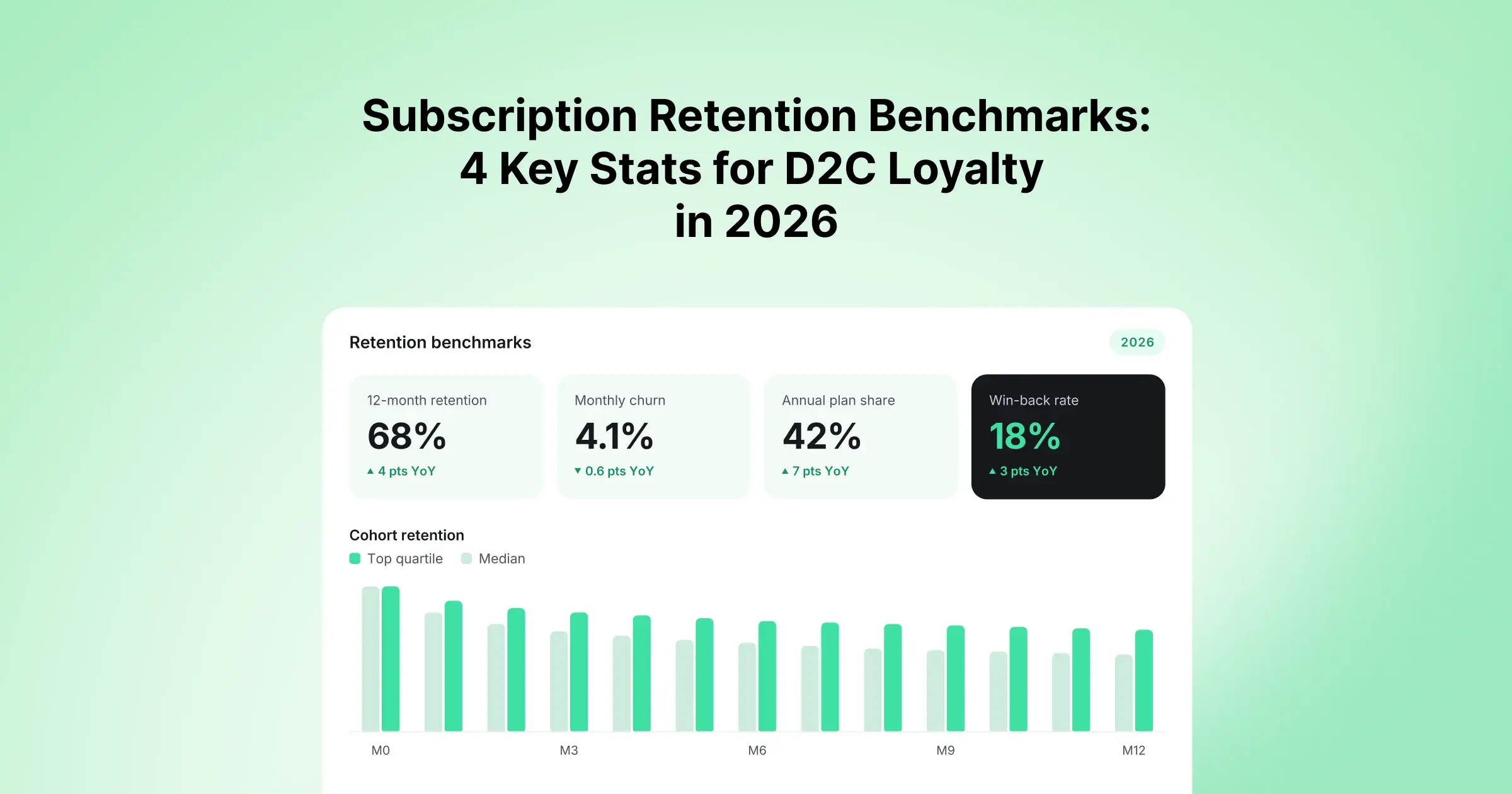 Churn & Retention Subscription Retention Benchmarks: 4 Key Stats for D2C Loyalty in 2026 **Kamila Palka** · Oct 6, 2026, 4:31:16 PM](https://blog.cleeng.com/subscription-retention-benchmarks)
#### [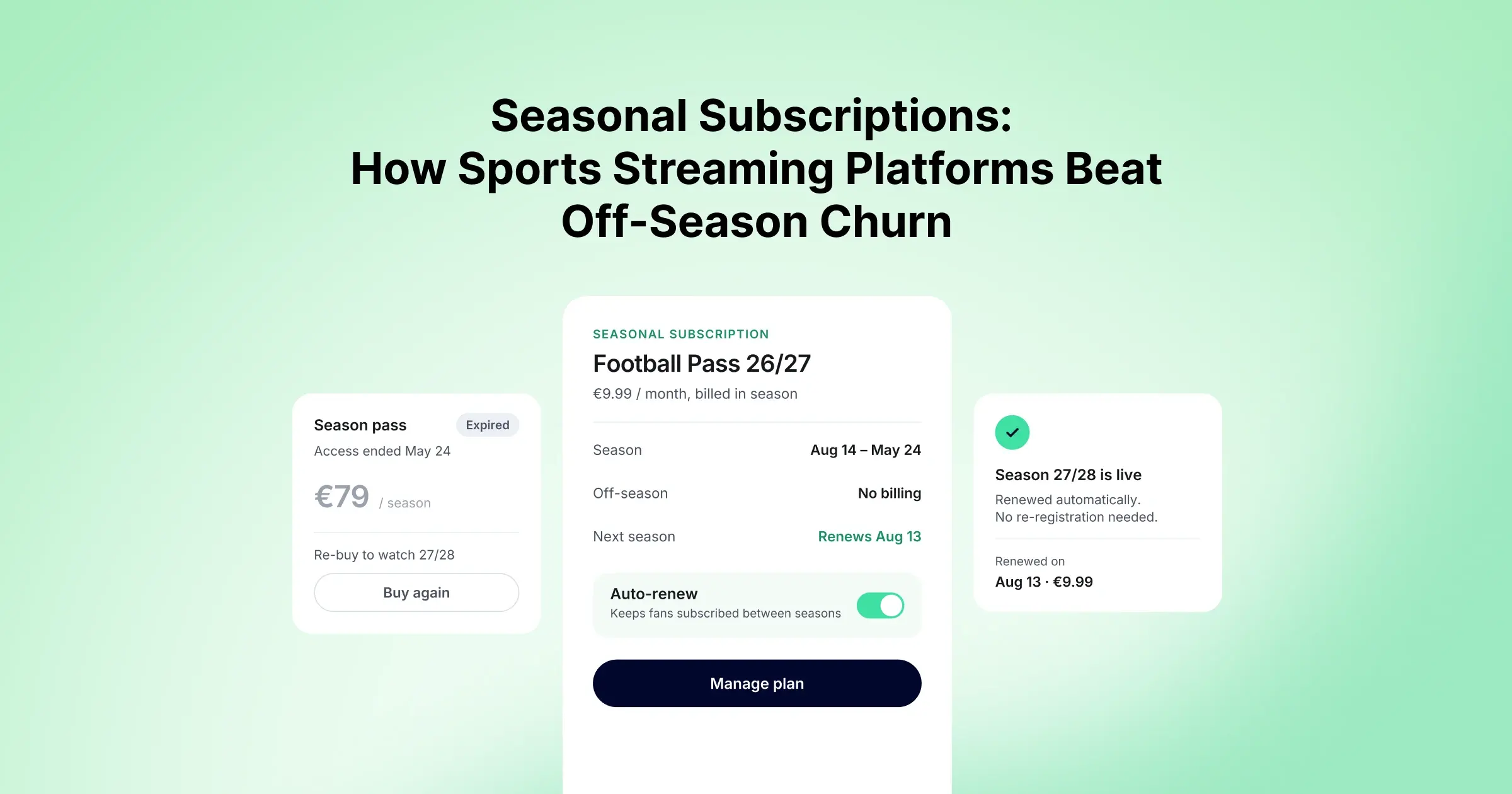 Churn & Retention Seasonal Subscriptions: How Sports Streaming Platforms Beat Off-Season Churn **Kamila Palka** · Sep 30, 2026, 7:33:48 AM](https://blog.cleeng.com/seasonal-subscriptions-for-sports-streaming)
#### [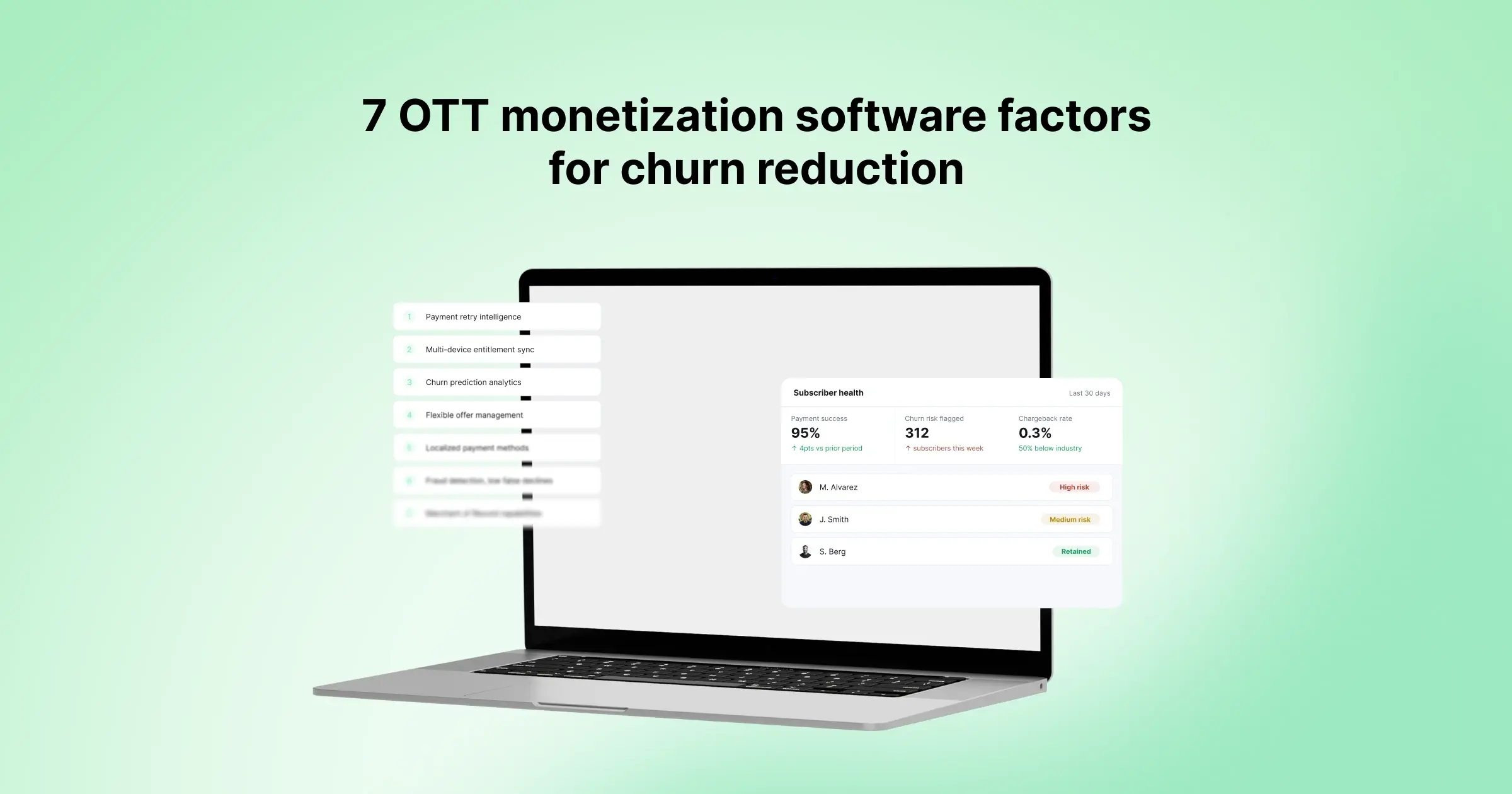 Churn & Retention 7 OTT Monetization Software Factors for Churn Reduction **Kamila Palka** · Aug 14, 2026, 3:43:34 PM](https://blog.cleeng.com/ott-monetization-software-factors-for-churn-reduction)
Your Subscriber Retention Management® solution
[Contact us](https://cleeng.com/contact)
#### Ask AI for info
- [ChatGPT](https://chatgpt.com/?q=...)
- [Gemini](https://gemini.google.com/app?q=...)
- [Claude](https://claude.ai/new?q=...)
- [Perplexity AI](https://www.perplexity.ai/?q=...)
#### Products
- [Subscriber management and billing](https://cleeng.com/subscriber-management-system)
- [Merchant of Record](https://www.cleeng.com/products/merchant-of-record)
- [Churn Analytics](https://cleeng.com/churniq-churn-intelligence)
- [AI-Enhanced Customer Care](https://cleeng.com/pro)
#### Solutions
- [Streaming and OTT](https://www.cleeng.com/solutions/streaming)
- [Sports](https://cleeng.com/subscription-management-for-sports)
- [Wellness](https://cleeng.com/wellness)
- [Creators](https://www.cleeng.com/solutions/youtube-creators)
- [Enterprise](https://cleeng.com/solutions/enterprise)
- [Small and Medium Businesses](https://cleeng.com/pro)
#### Developer
- [API Reference](https://developers.cleeng.com/reference/apireference-overview)
- [Sandbox](https://srm-sandbox.cleeng.com/register)
- [Tutorials](https://developers.cleeng.com/docs/getting-started-with-cleeng)
- [Integrations](https://cleeng.com/integrations-connectors)
- [Migration](https://cleeng.com/integrations-connectors)
#### About
- [Company](https://cleeng.com/about-us)
- [Blog](https://blog.cleeng.com/)
- [Sustainability](https://cleeng.com/sustainability)
- [Careers](https://cleeng.com/careers)
#### Explore
- [Pricing](https://cleeng.com/pricingpro)
- [My Dashboard](https://srm.cleeng.com/login)
- [FAQ & support](https://publisher.support.cleeng.com/hc/en-us)
#### Customers
- [Who are Cleeng](https://cleeng.com/who-are-cleeng)
- [Get Support](https://cleeng.zendesk.com/hc/en-us/)
Copyright © 2026 Cleeng | All Rights Reserved | [Terms & Conditions](https://cleeng.com/master-service-agreement)
```json
{
"@context" : "https://schema.org",
"@type" : "BlogPosting",
"author" : {
"@type" : "Person",
"name" : "Sebastian Boruch"
},
"dateModified" : "2026-08-13T08:48:23Z",
"datePublished" : "2026-04-23T10:26:36Z",
"description" : "Discover how brands can recover subscription revenue by addressing overlooked gaps in billing flexibility, data fragmentation, and payment recovery.",
"headline" : "How to Recover Subscription Revenue: 3 Gaps Subscription Brands Ignore",
"image" : "https://5813983.fs1.hubspotusercontent-na1.net/hubfs/5813983/recover%20revenue.webp",
"mainEntityOfPage" : {
"@id" : "https://blog.cleeng.com",
"@type" : "WebPage"
},
"publisher" : {
"@type" : "Organization",
"logo" : {
"@type" : "ImageObject",
"url" : "https://cdn.prod.website-files.com/624eb5c51026869311f0668a/66b09c7ffb2cada498b8a184_Cleeng%20logo%20-%20tagline%20bottom%20-%20transparent.svg"
},
"name" : "Cleeng"
}
}
```
```json
{
"@context" : "https://schema.org",
"@id" : "https://blog.cleeng.com/how-to-recover-subscription-revenue/#article",
"@type" : "Article",
"author" : {
"@type" : "Organization",
"name" : "Cleeng Editorial Team",
"url" : "https://cleeng.com/"
},
"dateModified" : "2026-04-23T10:30:00+00:00",
"datePublished" : "2026-04-23T09:00:00+00:00",
"description" : "Learn how to identify revenue leakage, reduce involuntary churn, and implement intelligent dunning strategies to recover subscription revenue.",
"headline" : "How to Recover Subscription Revenue: Proven Strategies for D2C Brands",
"image" : "https://blog.cleeng.com/hubfs/social-suggested-images/revenue-recovery-header.png",
"isPartOf" : {
"@id" : "https://blog.cleeng.com/how-to-recover-subscription-revenue/"
},
"keywords" : "subscription revenue recovery, involuntary churn, dunning strategies, payment retries, subscriber retention",
"mainEntityOfPage" : "https://blog.cleeng.com/how-to-recover-subscription-revenue",
"publisher" : {
"@type" : "Organization",
"logo" : {
"@type" : "ImageObject",
"url" : "https://5813983.fs1.hubspotusercontent-na1.net/hubfs/5813983/assets/cleenglogo.svg"
},
"name" : "Cleeng"
}
}
```
```json
{
"@context" : "https://schema.org",
"@type" : "HowTo",
"description" : "A systematic approach to identifying and recovering lost subscription revenue.",
"name" : "How to Recover Subscription Revenue in 4 Steps",
"step" : [ {
"@type" : "HowToStep",
"name" : "Data Auditing and Reconciliation",
"text" : "Cross-check data across CRM, billing, and payment systems to identify anomalies and revenue leakage points.",
"url" : "https://blog.cleeng.com/how-to-recover-subscription-revenue/#step1"
}, {
"@type" : "HowToStep",
"name" : "Track Key Retention Metrics",
"text" : "Identify gaps in billing or collections by monitoring ChurnIQ and other subscription analytics.",
"url" : "https://blog.cleeng.com/how-to-recover-subscription-revenue/#step2"
}, {
"@type" : "HowToStep",
"name" : "Optimize Dunning and Retry Logic",
"text" : "Implement intelligent payment retries aligned with bank timings and payroll cycles.",
"url" : "https://blog.cleeng.com/how-to-recover-subscription-revenue/#step3"
}, {
"@type" : "HowToStep",
"name" : "Automate Account Updaters",
"text" : "Use tools to automatically refresh expired or lost credit card information to prevent failed payments.",
"url" : "https://blog.cleeng.com/how-to-recover-subscription-revenue/#step4"
} ]
}
```
```json
{
"@context" : "https://schema.org",
"@type" : "FAQPage",
"mainEntity" : [ {
"@type" : "Question",
"acceptedAnswer" : {
"@type" : "Answer",
"text" : "Involuntary churn occurs when a subscriber loses access to a service due to failed payments, such as expired credit cards or insufficient funds, rather than a conscious decision to cancel."
},
"name" : "What is involuntary churn in subscriptions?"
}, {
"@type" : "Question",
"acceptedAnswer" : {
"@type" : "Answer",
"text" : "Dunning is the process of communicating with customers to recover failed payments. Automated dunning emails and smart retry logic significantly increase the chances of a successful transaction."
},
"name" : "How can dunning help recover revenue?"
} ]
}
```
```json
{
"@context" : "https://schema.org",
"@type" : "BreadcrumbList",
"itemListElement" : [ {
"@type" : "ListItem",
"item" : "https://blog.cleeng.com/",
"name" : "Blog",
"position" : 1
}, {
"@type" : "ListItem",
"item" : "https://blog.cleeng.com/how-to-recover-subscription-revenue",
"name" : "How to Recover Subscription Revenue",
"position" : 2
} ]
}
```
```json
{
"@context" : "https://schema.org",
"@type" : "Blog",
"description" : "Insights and strategies on subscriber retention and D2C subscriptions from Cleeng.",
"name" : "Cleeng Blog",
"publisher" : {
"@type" : "Organization",
"logo" : {
"@type" : "ImageObject",
"url" : "https://cdn.prod.website-files.com/624eb5c51026869311f0668a/66b09c7ffb2cada498b8a184_Cleeng%20logo%20-%20tagline%20bottom%20-%20transparent.svg"
},
"name" : "Cleeng"
},
"url" : "https://blog.cleeng.com"
}
```