Subscriber segmentation: the first step to retention in D2C
Building a subscription business is fundamentally different from selling widgets. When you sell a t-shirt, the goal is the transaction. Once the credit card clears, the relationship is mostly over.
But in the subscription economy, the payment is just the beginning of a journey.
For the last decade, the industry has been obsessed with subscriber acquisition. But we now have entered the Retention Era.
To grow in 2026, you need to stop looking at Subscribers as a monolith and start implementing advanced subscriber segmentation.
Yet, most publishers are still managing these complex, long-term subscriber relationships with tools designed for one-time transactions. They view a subscriber as a row in a database. Most analytics suites rely on binary metrics. You are either a subscriber, or you are churned. You are "Active," or you are "Inactive."
In a classic dashboard, these two people differ only by status. But in reality, they require completely different marketing strategies. One needs VIP treatment, the other needs immediate onboarding.
At Cleeng, we realized that the traditional tools of e-commerce, specifically the RFM Model (Recency, Frequency, Monetary), were failing D2C subscription brands. You cannot measure "Recency" of purchase in a subscription model where payments are automated. You cannot measure "Frequency" when the goal is passive recurring revenue.
So, we built something better.
Introducing Subscriber Journey Segments! It’s time to move beyond rows and columns and start understanding the psychology of your subscriber base.
Subscriber segmentation for the subscription era: beyond RFM
To build a subscriber segmentation strategy that actually works for streaming, fitness, or gaming platforms, we evolved the traditional RFM model. We analyze millions of data points to score users on three core dimensions:
-
Customer Lifetime Value: We don't just look at their current plan price. We look at who has spent the most over time.
-
Commitment: We analyze the users’ subscription age, their transaction history, and resilience against churn (have they churned and returned?).
-
Vulnerability: This is the game-changer. We measure the risk of churn based on renewal proximity and behavioral patterns.
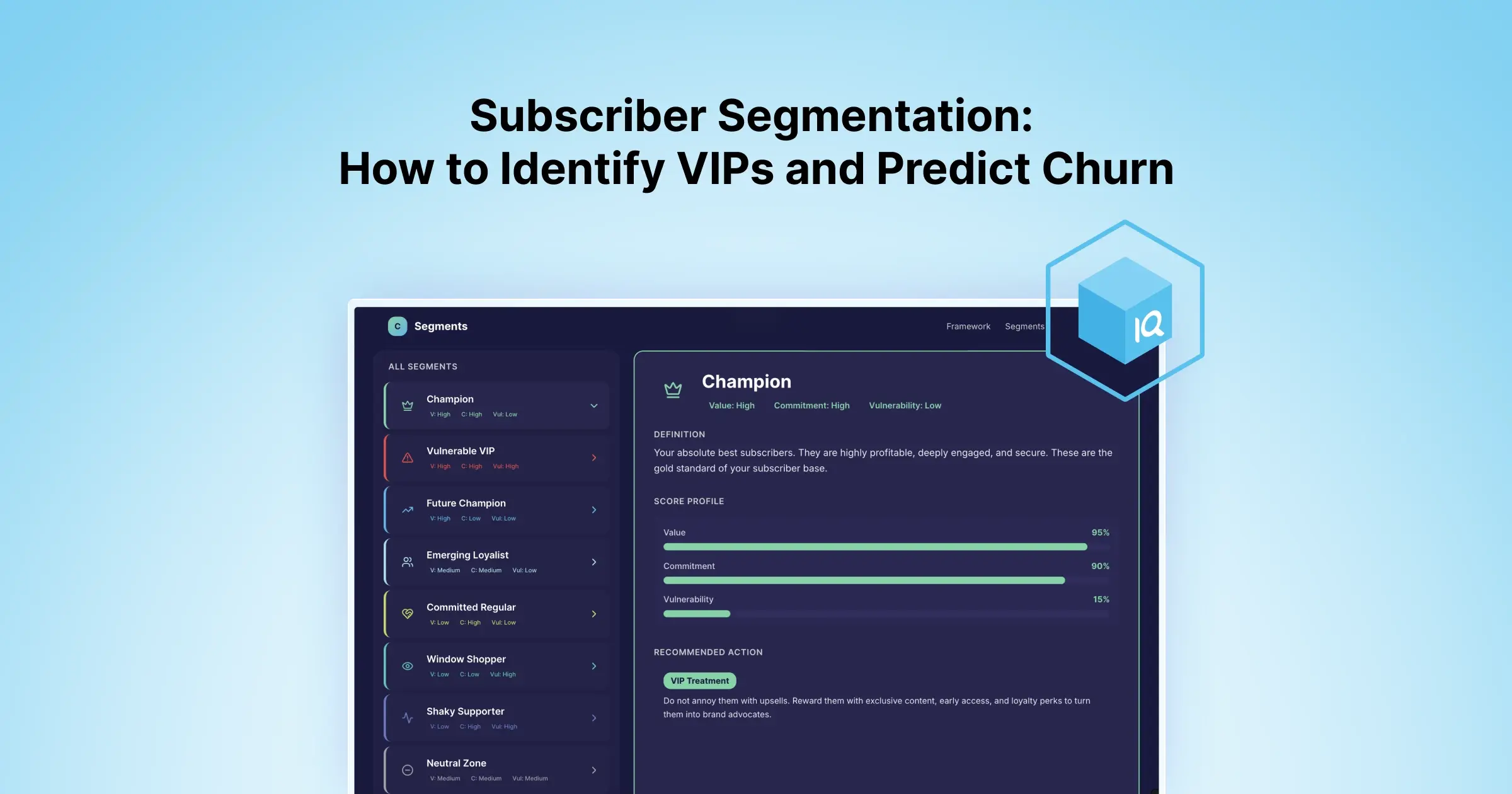
By combining these scores, the Subscriber Journey Segments framework automatically clusters your audience into eight distinct personalities, making personalized subscriber retention a reality.
8 key subscriber segmentation personas (and how to act on them)
Effective D2C subscriber segmentation allows you to move away from generic blast emails and toward surgical marketing. Here is how to handle your eight core segments and retain them for longer:


1. The Champion: High-value, low-vulnerability
In subscriber segmentation, Champions are high-value, high-commitment, low-ulnerability subscribers. They have been with you for a long time, spend the most money, and are highly unlikely to leave. This subscriber segment is considered to be your brand evangelists – your service has integrated into their daily lives.
2. The Vulnerable VIP: High-value but high churn risk
Vulnerable VIPs are at highest risk of churning. The reason for this can be their annual renewal date approaching or they are going through grace period. This of Vulnerable VIPs as "Whales" standing at the exit door. Your go-to strategy should be churn prevention, as losing one Vulnerable VIP hurts your revenue more than losing a new user. Trigger automated “We miss you” offers if they’ve been recently inactive, or use personal outreach before churn happens.
3. The Future Champion: New but showing high-value signals
Future Champions are newer subscribers who are showing all the right signs. They are on a high-value plan and are engaging well, but they haven't built up the "tenure" to be a full Champion yet. They are excited but impressionable. Push them toward annual plans or family tiers – upsell to solidify the habit now.
4. The Emerging Loyalist: The backbone of your growth
Emerging Loyalists are the backbone of your growth. They pay on time, they stay, but they aren't in the top tier of spending yet. They are steadily moving up the value ladder. Emerging Loyalists tend to be satisfied with, areforming a habit, and they are comfortable with their current plan and price. That means they don’t need aggressive discounts but rather content discovery to gently nudge them into higher engagement and eventually, premium tiers.

5. The Neutral Zone: Average spend and tenure
As the segment name suggests, subscribers in the Neutral Zone are in the middle: average spend, average tenure, average risk. They could stay for years, or they could leave tomorrow if a competitor offers a better deal. It’s important to not let them drift. Use newsletters and content highlights to keep reminding them of your value.
6. The Committed Regular: Low value but incredibly loyal
Committed Regulars are low value, but incredibly loyal. These are often subscribers on legacy pricing plans or basic tiers who have been with you for years. They are price-sensitive but reliable. Don’t try to aggressively upsell them, or you might wake a sleeping giant and cause churn. Appreciate their stability.
7. The Shaky Supporter: Mid-tier value but unstable
Shaky Supporters are mid-tier in value, but highly unstable. They might be "event-chasers" who subscribe for a season and leave, or users who frequently pause their subscriptions. Encourage deeper platform usage. Get them to download the mobile app or create a watchlist. The more "hooks" they have, the harder it is to leave.
8. The Window Shopper: Low commitment “tourists”
Window Shoppers are low-value, low-commitment subscribers. They just arrived, or they are on a trial/short-term pass. They are like tourists: looking around, checking what you have to offer. Focus on onboarding and "First Month" discounts to get them over the initial hump.

Case study: Data-driven subscriber segmentation in action
To show you how this framework adapts to different business models, let's look at real data distributions from two different types of subscription service providers between October 2025 and January 2026.
Publisher A: Managing seasonal churn risks
Publisher A focuses on streaming Sports/News with a heavy seasonal focus. In October 2025, there was a massive spike: 29% of their subscriber base was classified as Vulnerable VIPs. Why? Because thousands of annual subscriptions were set to expire in November. The algorithm correctly flagged these high-value users as "At Risk."
By January, the Vulnerable VIP count dropped to 15%, and the Emerging Loyalist/Champion segments surged. The renewal cliff passed, users paid, and they moved from "At Risk" back to "Safe."
If Publisher A had just looked at "Active Users," they would have missed the danger zone in October. Using Cleeng’s subscriber segments, they knew exactly who to target with retention offers.
Publisher B: Optimizing for short-term retention
Publisher B streams high-octane sports events using short-term subscriptions. Their dashboard presents a completely different reality: the Window Shopper segment consistently makes up nearly 50% of their entire base, double the industry average of 25%.
Why? Because their audience is event-driven. They arrive for a specific match and leave the moment it ends. Their users simply don't stay long enough to graduate into "Champions."
Recognizing this pattern, Publisher B realized that fighting churn was a losing battle. Instead of trying to force long-term loyalty, they shifted strategy to maximize immediate value. They now aggressively monetize these "Window Shoppers" with add-ons and merchandise on Day 1, accepting that the lifecycle is short but profitable.
If Publisher B had treated these users as "failed subscribers" or just "Active Users" with high churn, they would have wasted resources on retention. By seeing them clearly as "Window Shoppers," they optimized their business for immediate revenue.
The Segments Matrix: Turning subscribers insights into action
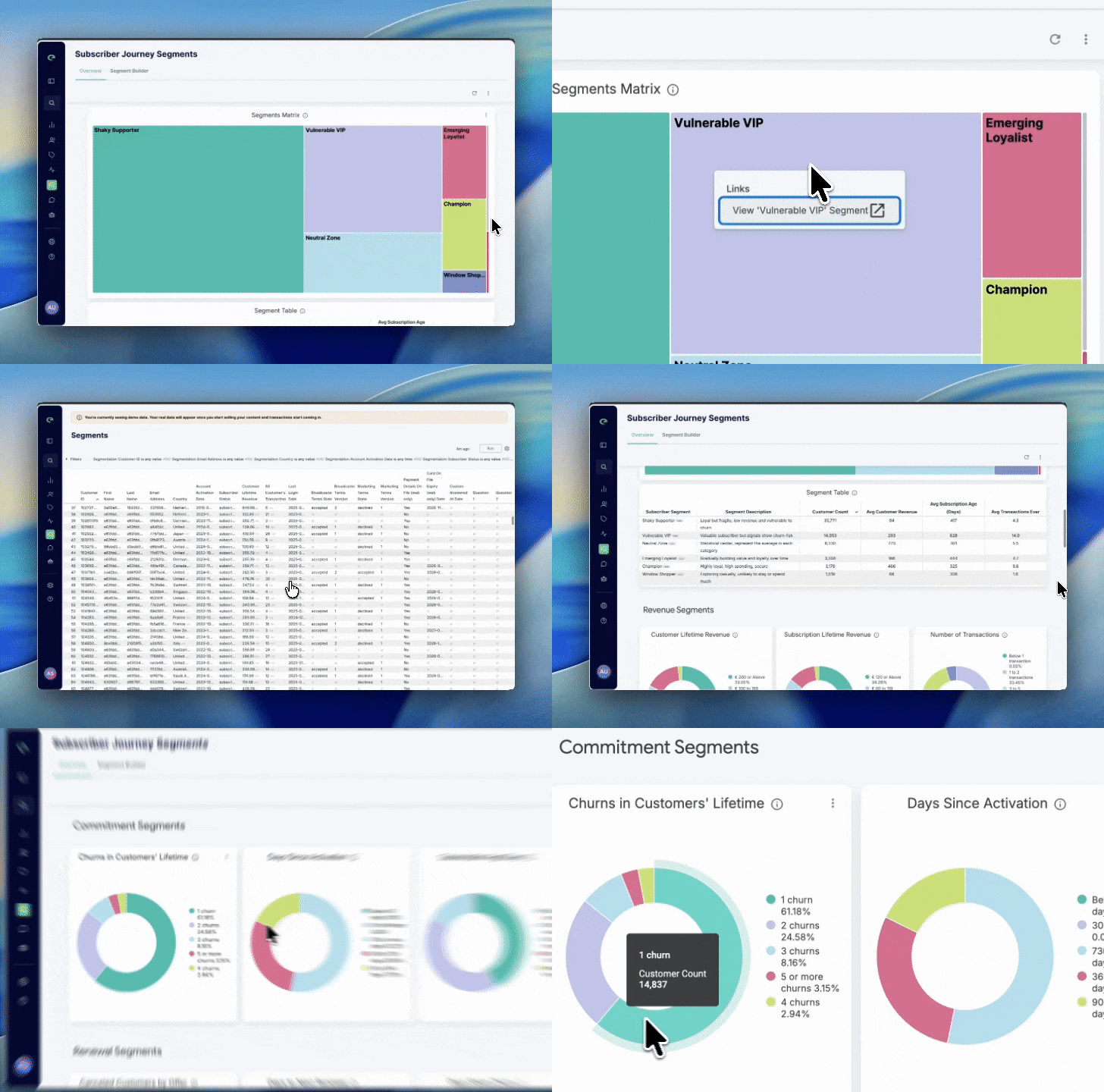
Our subscriber segmentation offers more than just a basic report – it provides a powerful command center for retention marketing. With our intuitive subscriber segment visualization treemap, you can view your entire database at a glance, easily identifying the size and composition of each segment with clarity.
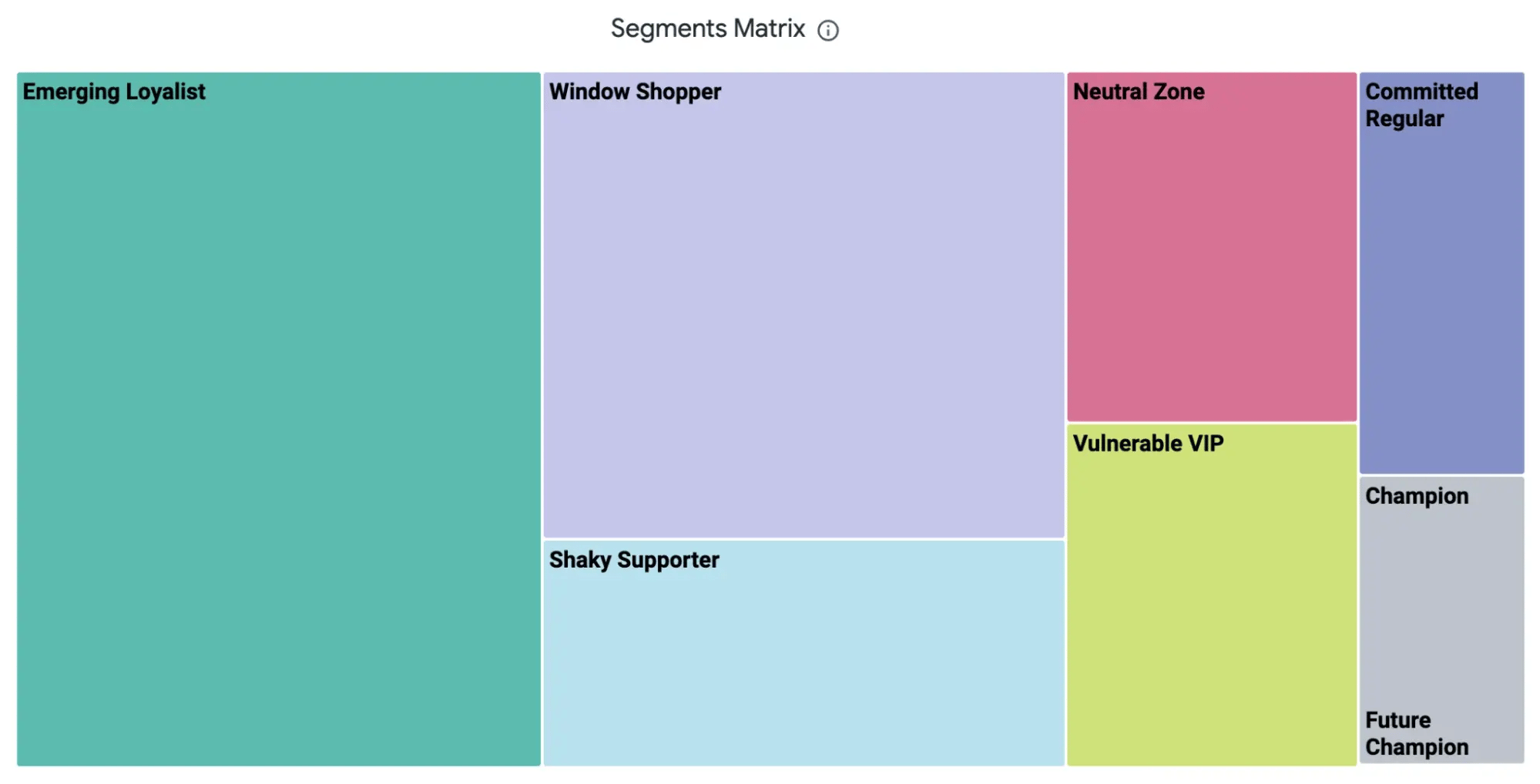
The size of each box represents the number of subscribers: Your healthy, low-risk segments (Champions, Emerging Loyalists) and your danger zones (Vulnerable VIPs, Shaky Supporters). At a glance, you can answer: "Is my business healthy (Champions, Emerging Loyalists) or am I bleeding value (Vulnerable VIPs, Shaky Supporters)?"
Cleeng’s Subscriber Segments offer more than just charts. While many analytics tools leave you to interpret the data on your own, we close the loop. For instance, if you click on the "Vulnerable VIP" segment, you are instantly taken to the Segment Builder. This powerful tool automatically generates a list of customers who fit that specific profile, allowing you to take immediate, targeted action.
15+ Dimensions of analysis
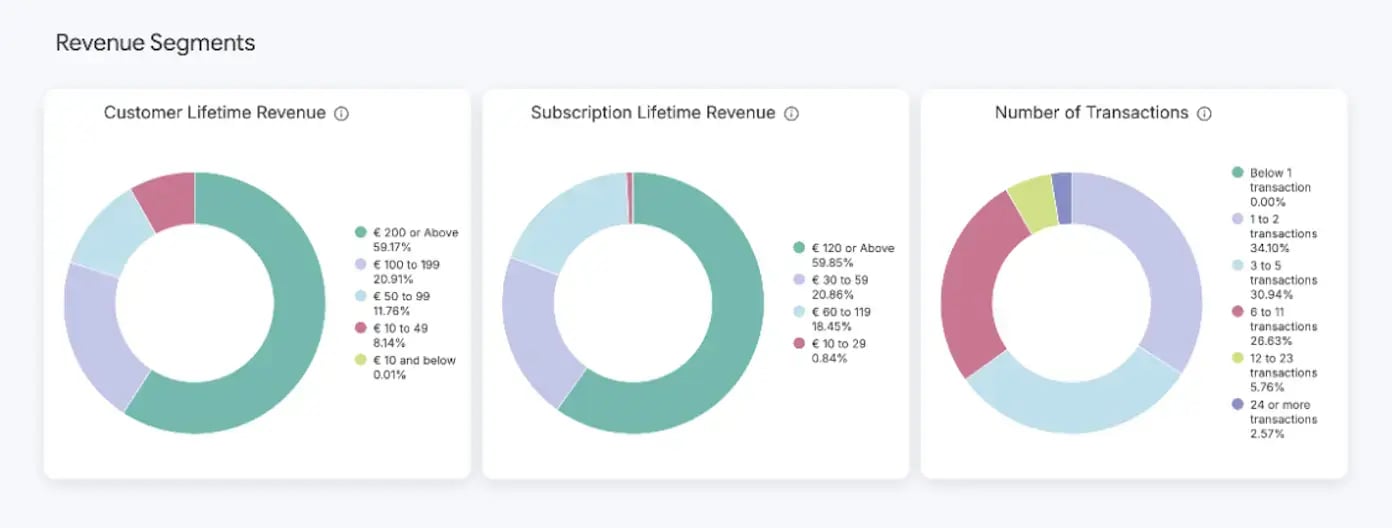
While the Segments Matrix is the star, the dashboard includes 15 other charts to help you slice your data by:
-
Payment method: Are Apple Pay users happier than Credit Card users?
-
Country: Where are your Champions located?
-
Churn history: Who are your "Boomerang" subscribers (churned and returned)?
-
Days to renewal: A precise countdown to your next cash flow spike.
Don't just analyze. Act.
The launch of Subscriber Journey Segments allows you to treat your subscribers like humans, not numbers. By mastering subscriber segmentation, you stop wasting marketing spend on generic newsletters and start sending the right message to the right person at the right time.

FAQs about subscriber segmentation
Q: Why is subscriber segmentation important for D2C brands?
Unlike one-time transactions, subscription models rely on long-term relationships. Subscriber segmentation allows brands to identify the specific health, value, and churn risk of every user, enabling personalized marketing that increases retention and lifetime value.
Q: How do you segment subscribers effectively?
Effective segmentation goes beyond "Active" vs. "Inactive." Modern strategies use three core dimensions: Value (Total Revenue), Commitment (Subscription Age/Resilience), and Vulnerability (Risk of Churn based on behavior and renewal dates).
Q: What is the difference between RFM and Subscriber Journey Segments?
Traditional RFM (Recency, Frequency, Monetary) was built for e-commerce. In subscriptions, "Frequency" is often automated and doesn't indicate engagement. Journey Segments replace these with metrics like "Resilience" and "Renewal Proximity" to better reflect the subscriber's psychology.
Q: How can I identify "at-risk" subscribers?
Using subscriber segmentation, you can identify "Vulnerable VIPs"—users who have high lifetime value but show signs of churn, such as approaching a major renewal date with declining engagement.