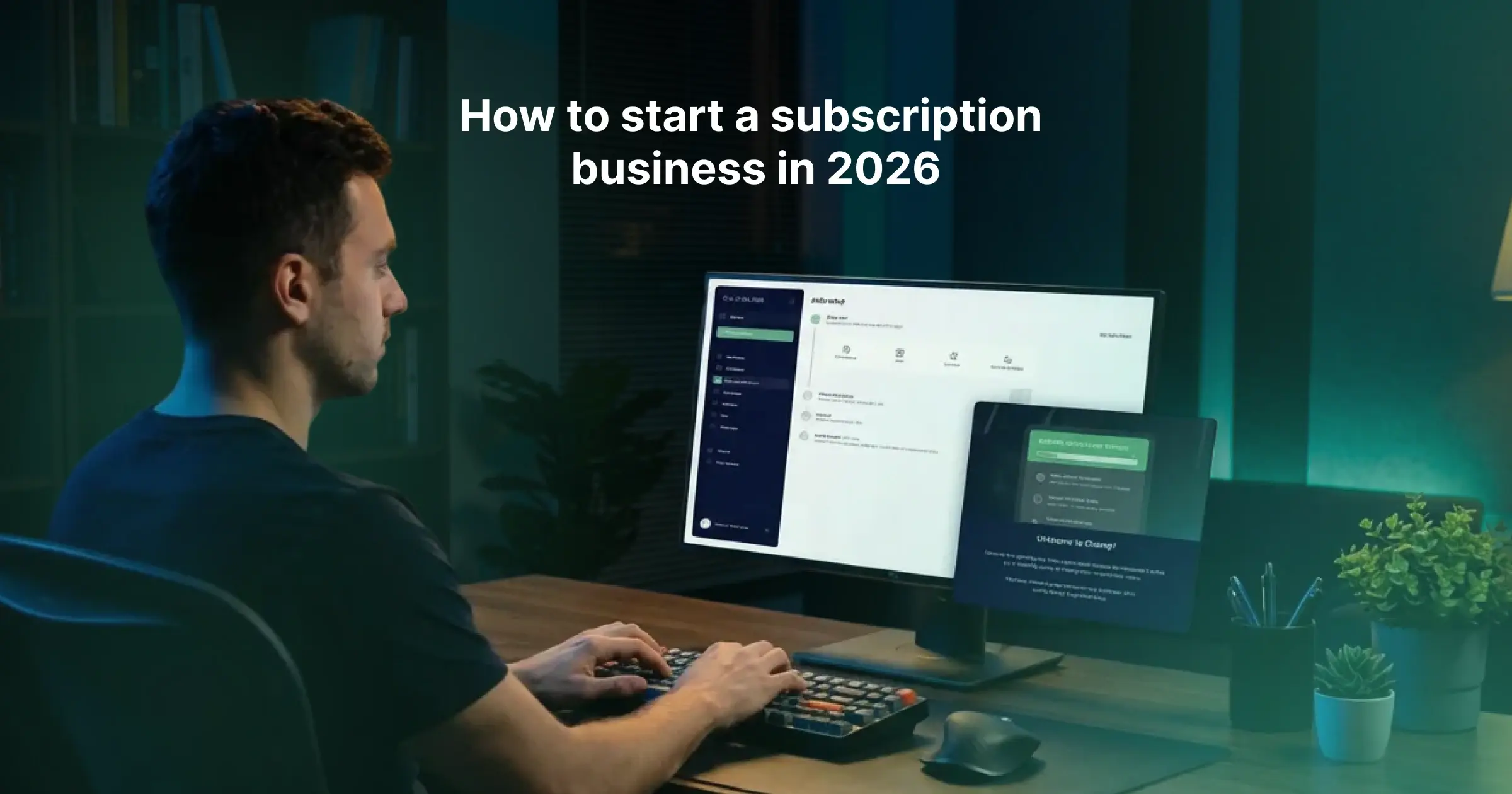
Digital subscriptions have become one of the fastest-growing business models of the last decade. Experts predict that the digital subscription market will grow to 1.9 trillion by 2035! In 2026, the opportunity for anyone looking to start a digital subscription business is even greater.
Consumers increasingly expect seamless access, personalized experiences, and flexible ways to pay. For creators, digital brands, and media companies, this means one thing: subscription business models are the foundation of sustainable growth.
Whether you're wondering how to start a digital subscription business or modernize an existing service, this guide walks you through everything you need to build, launch, and scale a subscription business in 2026 – based on industry best practices, new technologies, and lessons from leading D2C subscription brands.
What’s in this article?
-
The 2026 market shift: Why speed-to-market and retention are the new growth engines.
-
Defining your edge: How to choose a business model (D2C, streaming, or education) that scales.
-
The subscription business tech stack: Why you no longer need a dev team—and how to use tools like Lovable and Cleeng to build a platform in 60 minutes.
-
Global payments: Understanding the Merchant of Record (MoR) model to handle taxes and compliance automatically.
-
Retention economics: How to use ChurnIQ to extend subscriber lifecycles to 500+ days.
-
Scaling up: Practical steps to expand geographically and introduce tiered pricing.
Why the subscription model wins in 2026
Before building, it is important to understand why the subscription business model is projected to hit $1.9 trillion. The shift from "ownership" to "access" offers specific advantages for digital brands:
-
Predictable revenue (ARR): Unlike one-off downloads, subscriptions provide a baseline of recurring revenue that makes financial forecasting and raising capital significantly easier.
-
Higher Lifetime Value (LTV): By focusing on retention, you monetize the same customer for years. The average subscriber lifecycle for top digital brands has reached 500+ days.
-
Direct customer data: You own the relationship. Unlike selling on Amazon or App Stores, D2C subscriptions give you first-party data to personalize content and predict churn.
-
Zero marginal cost: Unlike physical goods, selling your 10,000th subscription costs virtually the same as your first. You can scale infinitely without worrying about supply chains or shipping logistics.
Key considerations before you launch your subscription business
Starting a subscription business requires more than just a website. To succeed in the 2026 landscape, you must account for these four pillars early:
-
The content pipeline: Do you have enough recurring value (content, tools, or products) to justify a monthly bill? One-hit wonder products cause high churn.
-
Global compliance: If you sell online, you are a global business from day one. You need a strategy for VAT/GST tax handling (or a Merchant of Record to handle it for you).
-
Retention tech: How will you save users who try to cancel? You need infrastructure that supports pause options, win-back offers, and card retries automatically.
-
Unit economics: Can you acquire a customer (CAC) for less than 30% of their Lifetime Value (LTV)? If your CAC is too high, the model breaks.
1. Understand the digital subscription landscape in 2026
Before building your subscription business, it’s crucial to understand the macro-trends shaping the market. The digital economy has matured significantly, moving away from simple access models toward highly integrated, intelligent ecosystems.
Speed-to-market is key: why launching a digital subscription business fast matters
In 2026, speed to market is more critical than ever. The ability for businesses to rapidly launch and scale their digital subscription offerings can mean the difference between capturing a growing audience and being left behind.
Companies that prioritize quick go-to-market strategies are able to test new ideas, respond to customer needs, and adapt to market trends much faster than competitors tied down by slow development cycles. Fast launches enable iterative improvements, early revenue generation, and increased agility in a dynamic marketplace.
Subscription compliance complexity requires robust solutions
As the digital economy has globalized, so has the regulatory framework surrounding it. Global merchants must now navigate an intricate web of tax rules, multi-currency support, and evolving fraud patterns. Managing these elements in-house is no longer a viable strategy for most startups; reliance on specialized infrastructure to handle compliance is critical for survival.
Retention is the new growth engine in D2C subscriptions
The "growth at all costs" mentality of the early 2020s has been replaced by a focus on unit economics and lifetime value (LTV). Smart subscription businesses prioritize churn prevention, sophisticated win-back strategies, and data-driven lifecycle management over aggressive top-of-funnel acquisition.
The winners in 2026 are those who combine smart technology, fast launch capabilities, and a deep understanding of retention economics.
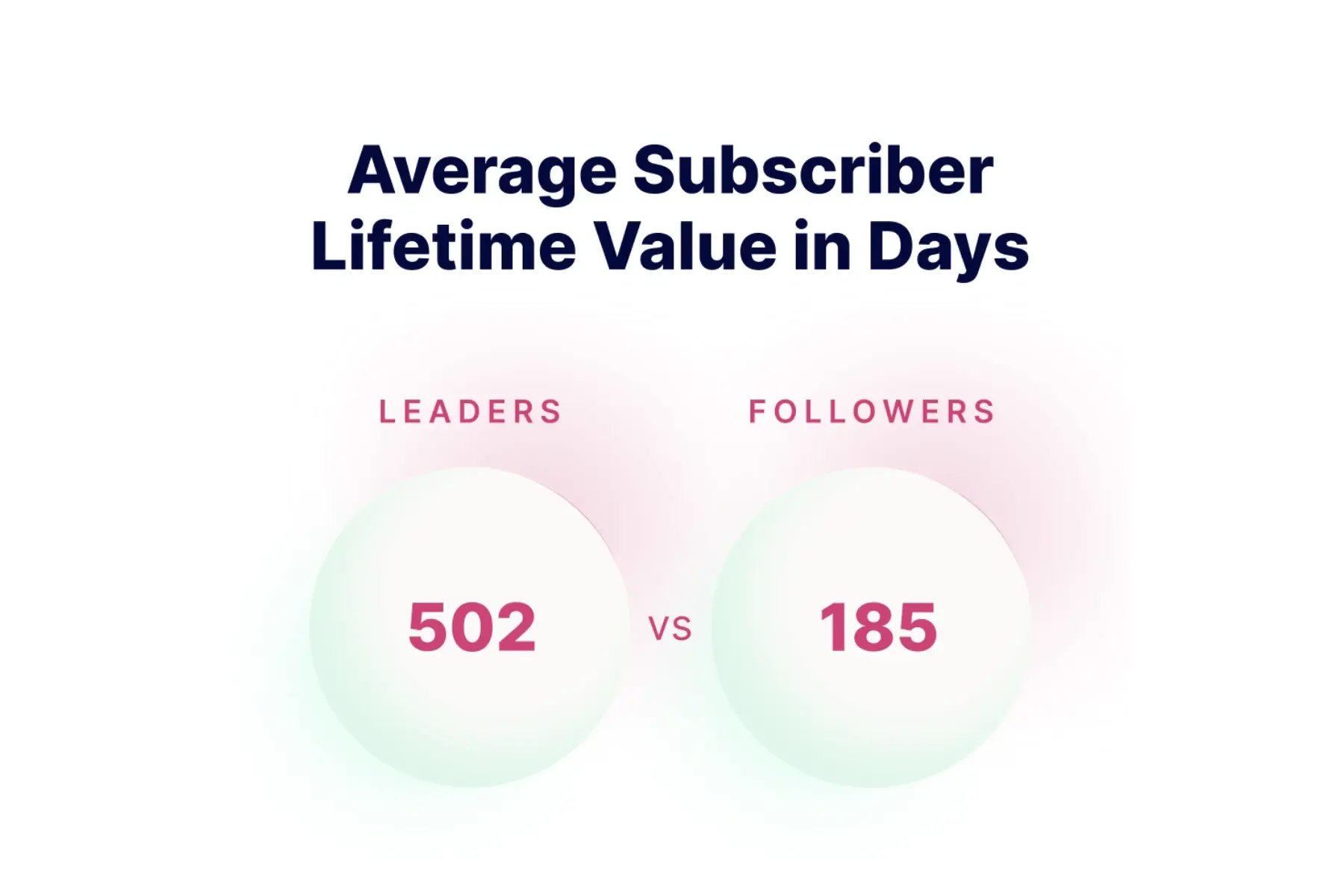
According to Cleeng's research, leading brands' average subscriber lifecycle is 502 days compared to just 185 days for followers. This difference highlights how investing in retention strategies directly impacts long-term business success.
Keen to discover more D2C subscription stats? Sign up for early access to our 2026 Retention Playbook.
2. Define your subscription offering
A strong subscription business starts with a strategic, well-defined offering. In a crowded marketplace, clarity is your greatest asset. The simpler your offer, the easier it is for new subscribers to understand and trust your value proposition.
To refine your offering, address the following core questions:
- What specific pain point does your subscription solve for the user?
- What encourages the subscriber to return month after month? Is it fresh content, utility, or community?
- Which features are essential (table stakes) and which are premium (upsell opportunities)?
- How often will you deliver value to justify the recurring billing cycle?
Examples of 2026 subscription models
The definition of a "subscription" has expanded. Today's successful digital subscription brands offer:
-
Digital media and streaming: Niche streaming platforms offer specialized content unavailable on mass-market services.
-
D2C content: Independent creators build empires on owned platforms rather than rented social media land.
-
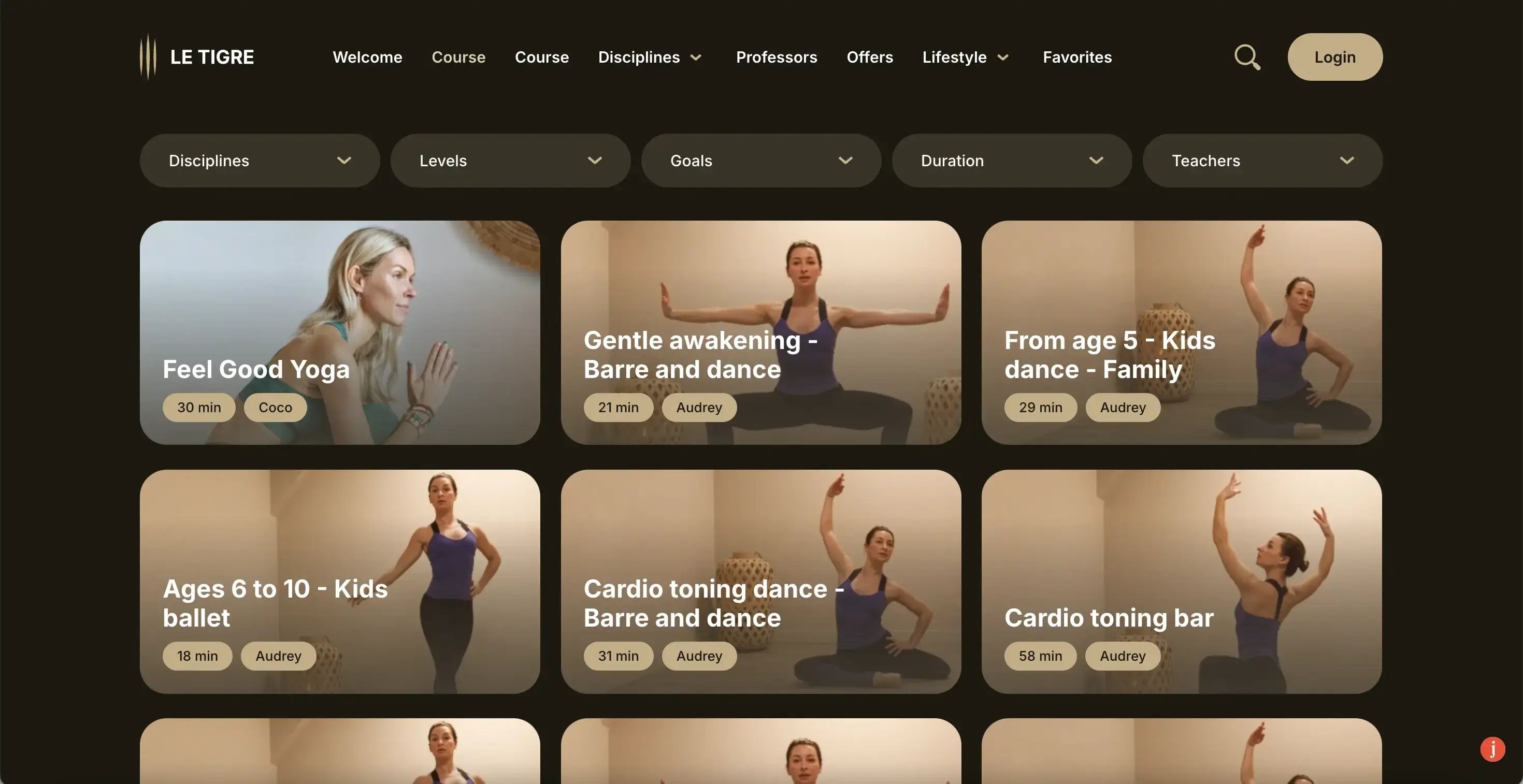
Wellness subscriptions: holistic apps combine fitness tracking, nutrition planning, and mental health resources.
-
Cohort-based education: learning platforms offer ongoing training rather than one-off courses.
-
Digital product bundles: curated libraries of apps, tools, and assets for specific professional personas.
3. Choose your subscription business tech stack
If you want to start a digital subscription business in 2026, the good news is that you no longer need a full engineering team or months of development. The barrier to entry has dramatically lowered thanks to no-code platforms, AI-assisted development, and plug-and-play subscription infrastructure. You can now launch in hours or even minutes – not months.
The 2026 subscription stack checklist: To launch effectively, you need three core components working in harmony:
-
Frontend (Storefront): AI-assisted builders like Lovable, Webflow, or Framer.
-
Backend (Infrastructure): A dedicated subscriber management system (SMS) like Cleeng.
-
Payments (Compliance): A Merchant of Record (MoR) to handle global taxes and liability.
Frontend (website builder)
Your storefront is your first impression. Platforms like Webflow and Framer, or an AI website builder like Lovable, allow you to build sophisticated, responsive websites using AI-assisted tools. These platforms have evolved to support complex integrations, allowing you to seamlessly connect your frontend design with backend logic.
For example, Cleeng provides resources on integrating Lovable with Cleeng, demonstrating how quickly a non-technical founder can set up a professional-grade subscription flow. You can also watch the following video.
Subscription management infrastructure
This is the engine of your business. You need a solution that handles authentication, customer accounts, offer management, and subscriber data without friction. Crucially, you need retention workflows built into the core product – allowing you to focus on your content while the system handles entitlement management and churn insights. Opt for tools like Cleeng.
Global payments and the MoR model
In 2026, limiting your business to one currency or payment method is a strategic error. You need global payment capabilities immediately, including:
-
Multiple payment methods (Credit cards, PayPal, local payment methods).
-
Multi-currency support to increase conversion rates.
-
Automated tax handling (VAT, GST, and US Sales Tax).
Utilizing a Merchant of Record for subscriptions is often the fastest path to global scalability. An MoR assumes the financial liability for processing global transactions, handling the complex regulatory compliance that typically slows down expansion.
Customer care and experience
Modern subscribers demand instant support. AI-assisted support tools power faster responses and higher satisfaction. Your helpdesk should provide self-service solutions and utilize LLM-based automated responses that are context-aware.
Furthermore, you need visibility across the entire lifecycle – acquisition, activation, retention, and churn. AI-powered analytics tools can now forecast churn, helping you prioritize the subscribers most at risk of leaving.
4. Build your subscription flow
Your subscription flow should feel intuitive from start to finish. Friction kills conversion, so every step must be optimized for speed and clarity.
Sign-up and onboarding
Reduce friction by asking only for what you absolutely need during the initial signup. Progressive profiling can capture more data later. Additionally, onboarding can guide new subscribers toward the content or features most relevant to them immediately after they join, increasing the likelihood of activation.
Subscription pricing and offers
Your pricing strategy should be flexible enough to capture different segments of the market. Ensure your system can handle:
-
Billing frequencies: Monthly and yearly plans to improve cash flow and retention.
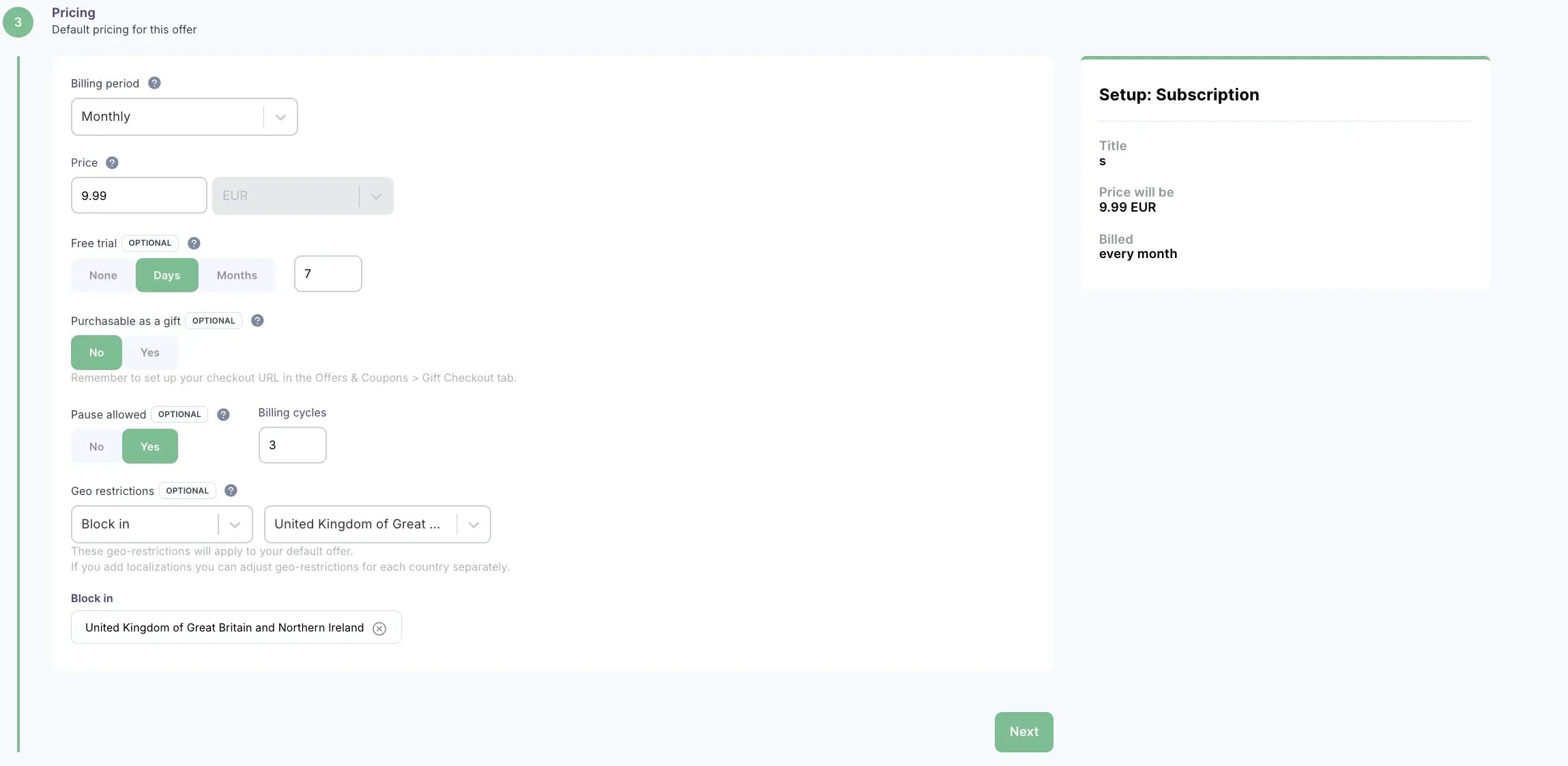
View of the Cleeng dashboard: Offer setup with pricing, promotions, free trial and localization features
-
Promotions: Limited-time or introductory offers to drive acquisition spikes.
-
Bundling: Combining products or premium tiers to increase Average Revenue Per User (ARPU).
-
Geo-localization: Automatically displaying pricing in the user's local currency.
-
Offer upgrades and downgrades: Allowing users to move between plans to match their changing needs and budget.

Payment and checkout
A modern checkout experience must be fast, secure, and optimized for mobile devices. Offering Apple Pay, Google Pay, and PayPal alongside traditional credit card inputs is increasingly essential for conversion. If a user has to search for their wallet, you have likely lost the sale.
In addition to global options, offering local payment methods is crucial for reaching a wider audience. Customers are more likely to complete a purchase when they can pay using familiar, region-specific options tailored to their preferences.
Entitlements
The moment a payment clears, the user must have access. Entitlement management is the technical process of granting the right access to the right user based on their specific plan. Cleeng’s entitlement system manages this automatically, ensuring that whether a user buys a single video or a yearly pass, their access is granted instantly and securely.
5. Launch your subscription service quickly – in less than 60 minutes
Speed to market is a competitive advantage. Many subscription businesses get stuck in endless sprints, backend complexity, and difficult integrations.
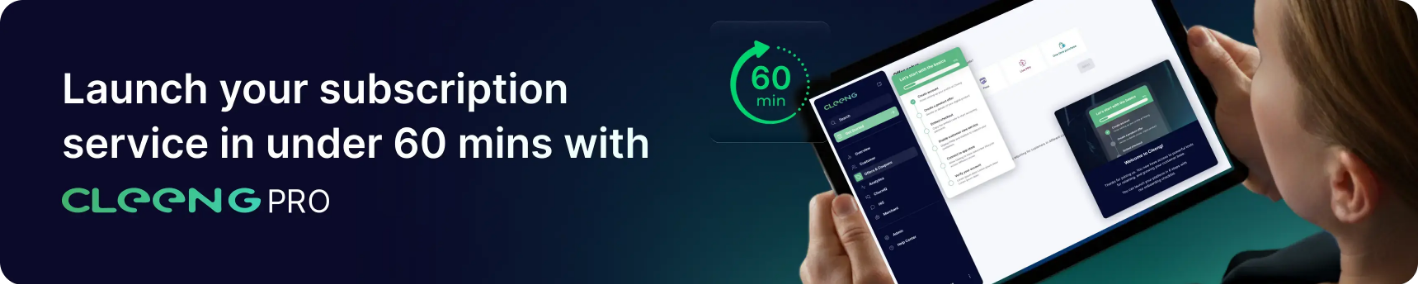
In 2026, technology has solved this bottleneck. With Cleeng Pro, companies can go from idea to revenue in as little as 60 minutes. This speed is possible because the platform provides:
-
Pre-built authentication: Secure login systems ready to deploy.
-
Out-of-the-box checkout: High-converting payment pages that don't require custom coding.
-
Global MoR coverage: Immediate access to international markets without legal hurdles.
-
Seamless APIs: Easy connections to frontend builders like Lovable.
By building your site on a modern builder like Lovable and connecting to Cleeng Pro using our integration guides, you can bypass the traditional 6-month development cycle entirely.
6. Prioritize retention early
Subscription success depends not just on acquisition, but on retention. In fact, retention is often more profitable than acquisition.
Best-in-class subscription businesses in 2026 monitor subscriber behavior from day one. They track churn patterns to understand why users leave. They deploy proactive win-back flows that trigger automatically when a user shows signs of disengagement.
Cleeng Pro includes analytics and churn-focused insights through ChurnIQ. This allows you to identify involuntary churn, such as failed payments, which is a major revenue leak for global brands. By recovering these failed payments, you boost revenue without needing to acquire a single new customer.
7. Scale your subscription business
Once your foundation is solid and your churn is managed, you are ready to scale intentionally. Scaling isn't just about spending more on ads – it's about expanding your footprint and your value.
-
Expand geographically: Use your MoR capabilities to target new regions with localized pricing.
-
Tier expansion: Launch new premium tiers or "Superfan" packages.
-
Add-ons: Increase LTV by offering one-time purchases or bundles.
-
Referral programs: Turn your best customers into your marketing team.
Leverage first-party subscriber data to inform these decisions. Optimize lifecycle management, ensuring that every subscriber receives the right message at the right time to maximize their lifetime value. With a subscription management platform built for global scale, you can grow without adding operational complexity.
2026 is the year to build your subscription business
Launching a digital subscription business in 2026 doesn’t have to be slow, complex, or expensive. With AI-powered tools, no-code builders, and proven subscription infrastructure, entrepreneurs and media brands can go live in hours – not months.
If you're ready to launch, modernize, or scale your subscription service, Cleeng Pro gives you everything you need: a quick launch in 60 minutes, easy integration with tools like Lovable, global payments with a Merchant of Record, and best-in-class subscriber management.