Choosing the right subscription management software can mean the difference between a thriving D2C media business and one that's constantly battling churn and operational headaches. For streaming platforms, OTT services, and digital content publishers, your billing and subscriber infrastructure directly impacts revenue, retention, and how quickly you can adapt to market changes.
This guide breaks down the seven essential factors you should evaluate when selecting a subscription platform, so you can make an informed decision that supports your growth ambitions.
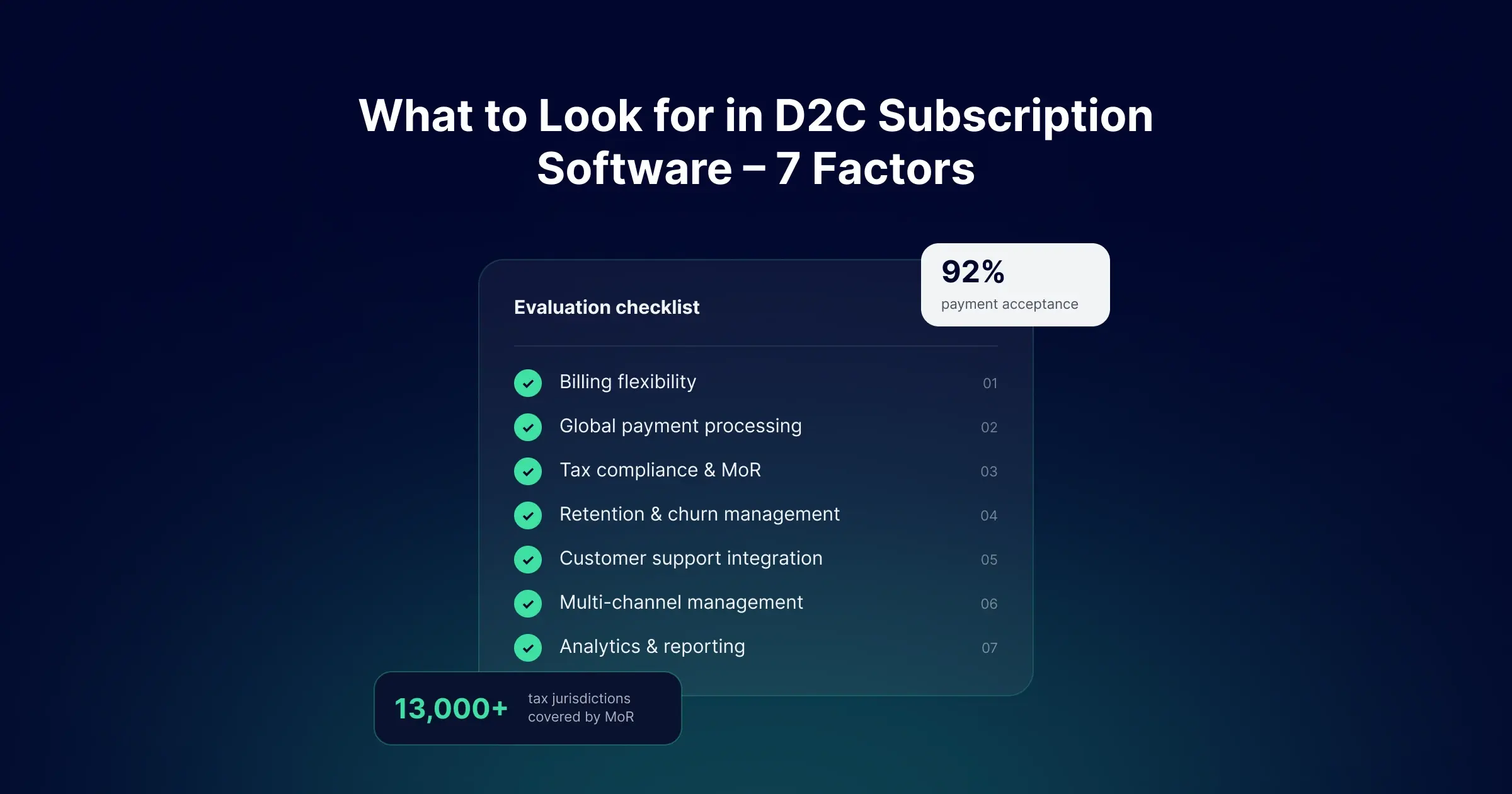
Quick guide: 7 things to look for in D2C subscription software
- Billing flexibility: The ability to support varied pricing models, seasonal subscriptions, promotional offers, and gifting
- Global payment processing: Multi-currency support with local payment methods and high acceptance rates
- Tax compliance and Merchant of Record: Automated tax calculation and remittance across jurisdictions
- Retention and churn management: Tools that predict and prevent subscriber loss
- Customer support integration: AI-powered care that reduces ticket volumes and improves response times
- Multi-channel subscriber management: Unified data across web, mobile, and connected TV platforms
- Analytics and reporting: Real-time insights into subscriber behavior and revenue performance
1. Subscription billing flexibility: Why your pricing options matter
D2C media businesses don't operate like traditional SaaS companies. You need to monetize through multiple models simultaneously: monthly and annual subscriptions, seasonal passes for sports content, live event rentals, and one-time purchases. Your subscription software must support this variety without requiring custom development for each new offer.
Cleeng's subscriber management system allows you to create and test different pricing strategies from a single dashboard. You can launch free trials, pause and resume options, and upgrade pathways without engineering involvement. This flexibility means you can respond to market conditions and seasonal patterns quickly.
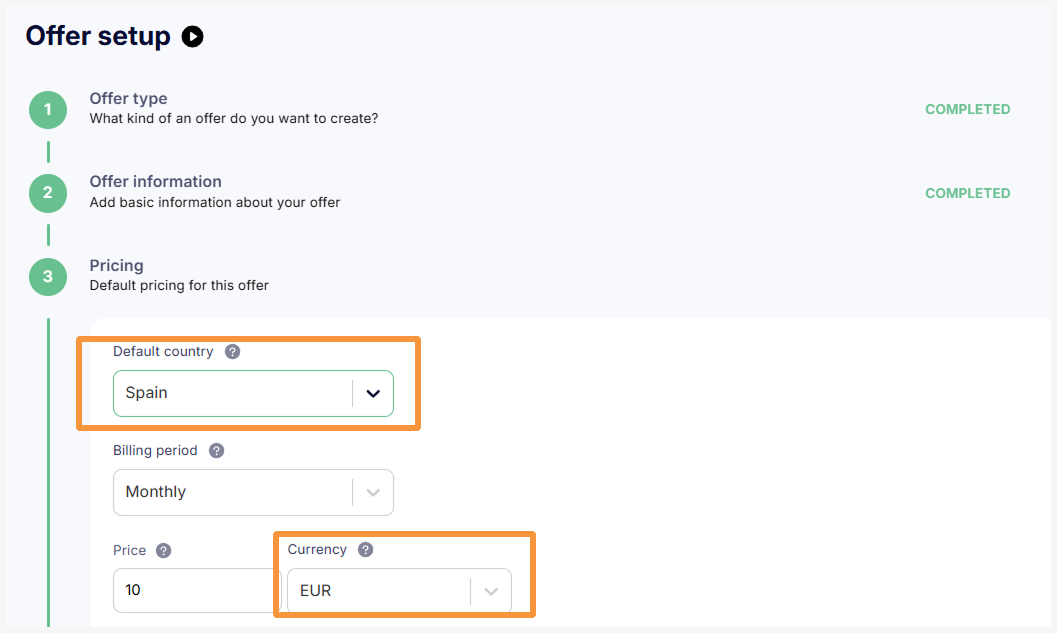
Look for platforms that let you configure billing periods (weekly, monthly, annual), set up automatic renewals, and manage promotional pricing through a no-code interface. The ability to experiment with pricing tiers and bundles directly impacts your ability to maximize subscriber lifetime value.
Billing flexibility features to evaluate
- Multiple offer types: Subscriptions, passes, live events, and one-time purchases from one system
- Promotional tools: Coupon management, VIP checkouts, and targeted discount campaigns
- Subscription lifecycle controls: Pause, resume, upgrade, and downgrade options for subscribers
- Free trial configuration: Customizable trial periods with flexible conversion flows
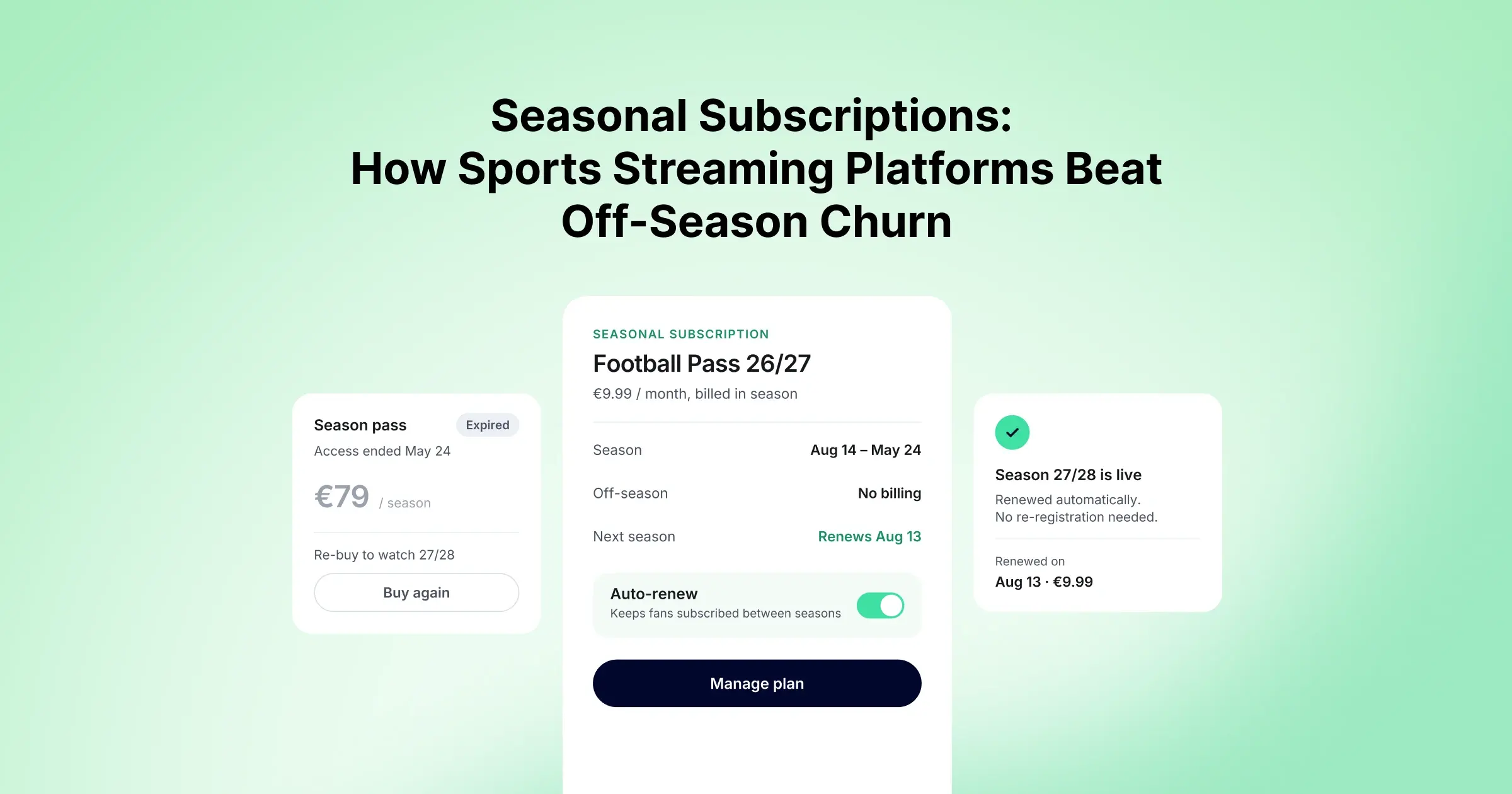
- Seasonal billing support: The ability to handle sports seasons, content release windows, and event-based access
2. Global payment processing: Reaching subscribers everywhere
If you're expanding beyond your home market, payment processing becomes one of your biggest operational challenges. Each region has preferred payment methods, currency requirements, and regulatory nuances. A payment failure in a new market doesn't just cost you one transaction; it can cost you a subscriber for life.
Cleeng's Merchant of Record solution processes payments across 230 countries and territories, supporting 37+ currencies with 200+ local payment methods. The platform achieves a 92% payment acceptance rate on average, which translates directly to retained revenue.
When evaluating payment processing capabilities, consider both first-time transaction success and recurring payment recovery. Intelligent retry logic, network token optimization, and dynamic routing through multiple payment service providers can recover a significant portion of initially failed payments.
Global payment processing features
- Multi-PSP integration: Connections to payment gateways like Adyen, Checkout.com, PayPal, and regional processors
- Local payment methods: Support for regional preferences including digital wallets, bank transfers, and carrier billing
- Intelligent payment routing: Dynamic selection of the optimal payment path based on transaction characteristics
- Failed payment recovery: Customizable retry schedules and dunning workflows to reduce involuntary churn
- Currency management: Automatic currency conversion with localized pricing displays
3. Tax compliance and Merchant of Record: Removing the regulatory burden for digital subscriptions
Managing sales tax, VAT for subscriptions, and GST across dozens of jurisdictions is one of the most complex operational challenges for D2C media businesses. Get it wrong, and you face penalties, audits, and potential market access issues. This is where a Merchant of Record (MoR) model becomes valuable.
As your Merchant of Record, Cleeng takes on the legal responsibility for selling to your subscribers. This includes calculating the correct tax based on each customer's location, collecting that tax at checkout, and remitting it to the appropriate authorities across 13,000+ tax jurisdictions worldwide.
For media businesses expanding internationally, this approach removes a significant barrier to entry. You can launch in new markets within weeks rather than spending months establishing local entities and tax registrations.
Tax compliance features
- Automatic tax calculation: Real-time determination of correct rates based on customer location
- Tax remittance: The MoR handles payments to tax authorities on your behalf
- Compliance monitoring: Ongoing tracking of changing tax regulations across jurisdictions
- Audit support: Documentation and reporting for tax audits
- Data privacy compliance: Adherence to GDPR and regional data protection requirements
4. Retention and churn management: Keeping the subscribers you've earned
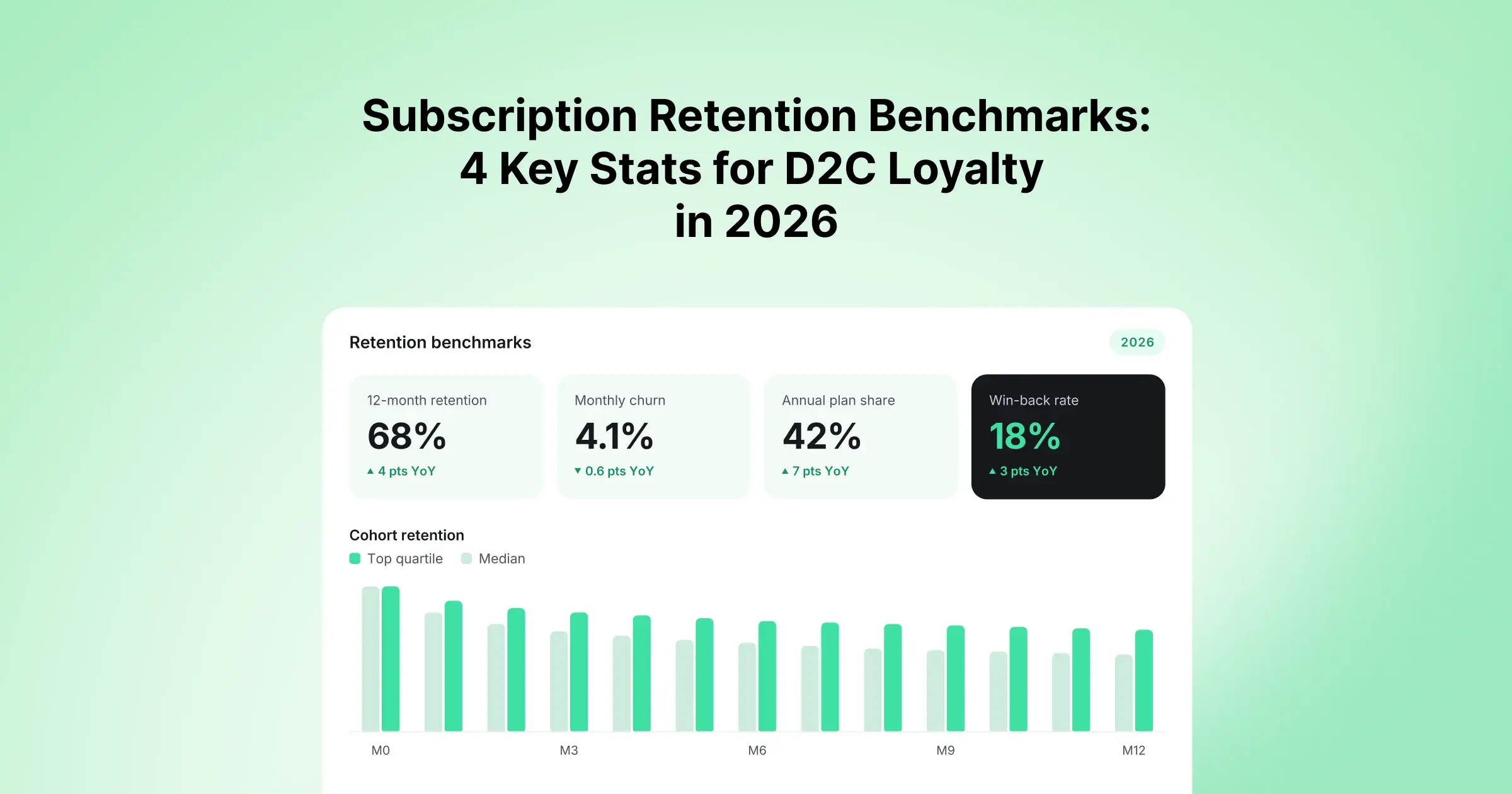
For D2C media businesses, where content investments are substantial and subscriber lifetime value determines profitability, churn management isn't optional, it's essential. According to Antenna's Q1 2026 State of Subscriptions Report, Premium SVOD churn has stabilized around 4.6%, but that still represents significant subscriber turnover that targeted retention strategies can address.
Cleeng's ChurnIQ identifies at-risk subscribers before they cancel, allowing you to intervene with targeted retention campaigns. The platform tracks over 80 data dimensions to segment subscribers and predict churn risk, enabling automated workflows that deploy the right offer at the right moment.
Effective churn management goes beyond reactive measures. Look for platforms that help you understand why subscribers leave, identify patterns in cancellation behavior, and test different retention strategies systematically.
Retention and churn management features
- Churn prediction: AI-powered identification of subscribers likely to cancel
- Automated retention campaigns: 60+ campaign types including pause options, win-back offers, and loyalty incentives
- Cancellation flow optimization: Alternative options presented before final cancellation
- Win-back tracking: Measurement of re-subscription rates from churned subscribers
- Engagement scoring: Behavioral signals that indicate subscriber health
5. Customer support integration: Resolving issues efficiently
For D2C media businesses, customer support volumes spike during major content releases, live events, and billing cycles. Your subscription platform should help you manage these peaks without proportionally increasing support costs.
Cleeng's AI-powered customer care handles common subscriber inquiries automatically, from payment questions to subscription modifications. The system integrates with your subscriber data, so agents have full context when handling more complex issues.
Self-service capabilities matter too. Subscribers should be able to update payment methods, change plans, pause subscriptions, and access transaction history without contacting support. This reduces ticket volumes while improving the subscriber experience.
For example, Cleeng's clients achieve a 67.2% help center engagement rate, while 82.7% of tickets are resolved in a single interaction.
Customer support integration features
- AI chatbot with handoff to human agents: Automated handling of common inquiries and account changes
- Self-service portal: Subscriber access to account management functions and help center articles
- Agent tools: Full subscriber context for support representatives
- Multilingual support: Coverage for global subscriber bases
- Integration with CRM: Connection to broader customer relationship systems
6. Multi-channel subscriber management: Unified data across devices
D2C media subscribers access content across web browsers, mobile apps, and connected TVs. Your subscription platform needs to manage entitlements and billing data consistently across all these touchpoints.
Cleeng's multi-channel framework unifies subscriber data from multiple platforms, including Apple App Store, Google Play, Roku, Amazon Fire TV, Samsung TV, and direct web subscriptions. This creates a single source of truth for each subscriber's status, payment history, and entitlements.
For media businesses, this consolidation matters for reporting accuracy, customer support, and marketing. When a subscriber contacts you, your team should see their complete relationship with your service, regardless of which device they used to subscribe or most recently accessed content.
Multi-channel management features
- App store integration: Native connectors for Apple, Google, Roku, Amazon, and Samsung platforms
- Unified subscriber profiles: Single view of each subscriber across all touchpoints
- Cross-platform entitlements: Consistent access control regardless of device
- Carrier billing support: Integration with telco billing for specific markets
- Real-time synchronization: Immediate updates across all channels when subscription status changes
7. Analytics and reporting: Making data-driven decisions
Subscription metrics like MRR, ARR, churn rate, and subscriber lifetime value should be accessible in real-time, not generated through manual exports and spreadsheet calculations. Your subscription platform should give you visibility into what's working and what needs attention.
Cleeng's analytics platform tracks 80+ data dimensions and provides pre-built segments for actionable analysis. You can monitor offer performance, track campaign effectiveness, and identify trends in subscriber behavior without building custom reports. You can also use the AI Assistant available within the dashboard to help you analyze your data and draw actionable conclusions.
For D2C media businesses, content-specific analytics matter too. Understanding which programming drives subscriptions, which content correlates with churn, and how promotional events impact subscriber acquisition helps you make better investment decisions.
Analytics and reporting features
- Real-time dashboards: Live visibility into key subscription metrics
- Cohort analysis: Tracking of subscriber groups over time
- Export capabilities: Data extraction for business intelligence tools
- Custom reporting: Ability to build reports specific to your business questions
- AI analyst: AI Assistant with the ability to analyze your data and act on it
Comparison table: Subscription software evaluation criteria
| Feature | Cleeng | Recurly | Chargebee | Zuora |
|---|---|---|---|---|
| Media-specific billing models | ✓ | Partial - markets to media but core billing is generalist SaaS billing | ✗ | ✗ |
| Built-in Merchant of Record | ✓ | ✗ | ✗ (3-rd party via Reach) | ✗ |
| Connected TV integrations | ✓ | ✓ | ✗ | Partial |
| AI-powered churn prediction | ✓ | ✓ | ✓ | Partial |
What makes seasonal billing important for media subscriptions?
Sports leagues, event series, and seasonal content releases don't fit neatly into standard monthly or annual billing cycles. Your subscription platform should accommodate these patterns without custom workarounds.
Consider a sports streaming service. You need to offer season passes that align with the actual competition schedule, potentially with different pricing for regular season versus playoffs. You may want to pause subscriptions during the off-season rather than canceling them, keeping subscribers connected while reducing churn during periods without new content.
Cleeng supports these scenarios natively, with pause and resume functionality, seasonal subscription configurations, and the ability to offer passes alongside recurring subscriptions. This flexibility lets you align your billing with how subscribers actually consume your content.
How does integration speed affect subscription platform decisions?
For D2C media businesses, time to market matters. Whether you're launching a new service, migrating from a legacy platform, or expanding to new channels, lengthy integrations create opportunity costs and competitive disadvantages.
Cleeng enables integration of a complete proof of concept in under 60 minutes through its open APIs and pre-built SDKs. For larger migrations, the platform includes dedicated migration tools; the NFL transitioned a 10-year legacy platform to Cleeng in just 10 weeks.
When evaluating subscription platforms, ask about typical integration timelines for businesses similar to yours. Request references from companies that have completed migrations, and understand what resources you'll need to commit to the project.
Why Cleeng is the top subscription software for D2C media businesses
Generic subscription billing platforms can handle basic recurring payments, but D2C media businesses need more. You need infrastructure designed for the specific challenges of streaming, OTT, and digital content: variable billing models, global payment complexity, high-volume scalability, and sophisticated retention tools.
Cleeng built its Subscriber Retention Management (SRM®) platform specifically for the media and entertainment industry. With 99.998% platform availability, 12.3 billion API requests served annually, and integrations across every major app store and connected TV platform, Cleeng delivers the enterprise-grade reliability that leading media brands require.
The combination of billing flexibility, tax compliance, churn management, and multi-channel support in a single platform means you can consolidate your subscriber infrastructure and focus on what matters most: creating great content and growing your audience.
Ready to see how Cleeng can support your D2C media business? Calculate your potential ROI or create a free account to view the Cleeng dashboard.

FAQs about subscription management software for D2C media
What billing models should D2C subscription software support?
Your subscription platform should support subscriptions (monthly, annual, seasonal), pay-per-view or rental options, live event passes, and one-time purchases. Cleeng handles all these models from a single system, allowing you to mix and match based on your content strategy.
How important is Merchant of Record status for media businesses?
Very important if you're operating internationally. A Merchant of Record takes on the legal responsibility for sales, including tax calculation and remittance across jurisdictions. Cleeng's MoR covers 13,000+ tax jurisdictions, removing a major barrier to global expansion.
What churn rate should D2C media services expect?
Industry benchmarks for Premium SVOD services show churn rates around 4-6% monthly. Cleeng's retention tools help reduce churn by identifying at-risk subscribers and deploying targeted retention campaigns automatically.
How do connected TV integrations work with subscription platforms?
Cleeng maintains native integrations with Apple, Google, Roku, Amazon Fire TV, and Samsung platforms. These connectors sync subscriber data and entitlements in real-time, creating a unified view regardless of which device the subscriber uses.
What payment acceptance rate should subscription platforms achieve?
For recurring subscription payments, you should expect acceptance rates above 90%. Cleeng maintains a 92% average payment acceptance rate and recovers 35% of initially failed renewal payments through intelligent retry logic.
How quickly can you integrate a new subscription platform?
Integration timelines vary based on complexity, but Cleeng enables proof-of-concept deployment in under 60 minutes. Full migrations from legacy platforms typically take 8-12 weeks depending on the scope of subscriber data and integrations involved.